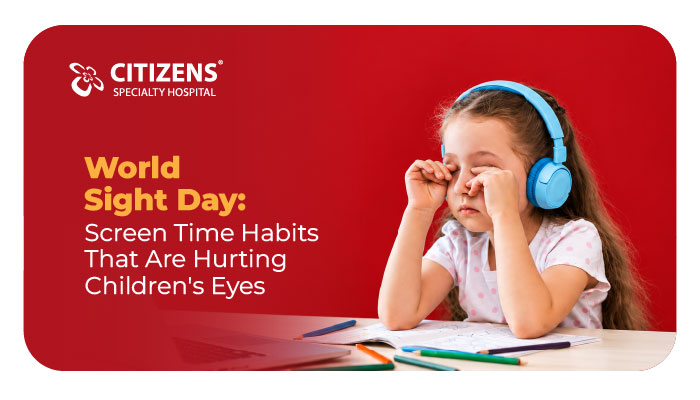
World Sight Day, observed on the second Thursday of October, draws global attention to vision health and the prevention of avoidable vision loss. In recent years, one concern has risen to the top of the list for parents and eye specialists alike: the effect of screens on children's eyes.
Online classes, homework on tablets, cartoons on phones and weekend gaming sessions mean many children now spend more time looking at screens than ever before. While screens are a part of modern life and learning, certain habits can strain young eyes and contribute to a growing problem worldwide: childhood myopia, or short-sightedness.
Why Children's Eyes Are More Vulnerable
A child's eyes are still developing. The eyeball grows in length during childhood, and the way it grows is influenced by genetics and by how the eyes are used every day. When children spend long hours focusing on objects very close to their faces and little time outdoors, the eye may grow longer than it should. This elongation causes distant objects to look blurry, which is myopia.
Children are also less likely to notice or report discomfort. An adult might rub their eyes and take a break; a child absorbed in a game may keep going for hours. Young children also tend to hold devices much closer to their faces than adults do.
Screen Habits That Can Harm Children's Eyes
1. Holding Devices Too Close
Phones and tablets are often held just 15 to 20 cm from a child's face. This forces the focusing muscles inside the eye to work very hard for long periods. Over time, sustained close focus is associated with a higher risk of developing and worsening myopia.
2. Long, Uninterrupted Sessions
Continuous screen use without breaks leads to digital eye strain. Children may experience tired, aching eyes, headaches and blurred vision after long sessions.
3. Forgetting to Blink
People blink much less often when staring at screens. Reduced blinking causes the tear film on the eye's surface to evaporate, leading to dry, gritty or burning eyes.
4. Using Screens in the Dark
Watching videos in bed with the lights off is common, but the sharp contrast between a bright screen and a dark room increases glare and eye discomfort.
5. Screens Late at Night
Blue light and stimulating content in the evening can interfere with sleep by suppressing melatonin, the hormone that signals it is time to sleep. Poor sleep leaves children tired and irritable, and tired eyes are more prone to strain.
6. Too Little Time Outdoors
This is one of the most important factors. Research consistently shows that children who spend more time outdoors have a lower risk of developing myopia. Natural daylight is thought to support healthy eye growth, and outdoor play naturally encourages looking at distant objects.
7. Poor Posture and Screen Position
Lying on the stomach or curling up with a phone leads to awkward viewing angles and screens held closer to the eyes.
How Much Screen Time Is Appropriate?
Recommendations vary by organisation, but general guidance includes:
Educational screen use for school counts too. When online learning takes up much of the day, it becomes even more important to reduce recreational screen time and build in outdoor breaks.
Warning Signs Your Child May Have a Vision Problem
Children rarely say "I can't see properly." Instead, vision problems often show up in behaviour. Watch for:
If you notice any of these signs, schedule an eye examination rather than waiting for the next routine check-up.
Digital Eye Strain vs Myopia: What's the Difference?
Digital eye strain is a temporary set of symptoms caused by prolonged screen use. It includes tired eyes, dryness, blurred vision and headaches. Symptoms usually improve with rest and better habits.
Myopia is a refractive error in which distant objects appear blurred because of the shape of the eye. It usually develops during school years and tends to progress as the child grows. It does not go away with rest and requires correction with glasses or contact lenses. High myopia later in life is linked to a higher risk of serious eye conditions such as retinal detachment, glaucoma and myopic maculopathy, which is why early detection and management matter.
How Eye Specialists Help
A paediatric eye examination is quick, painless and child-friendly. It may include:
If myopia is detected and progressing, specialists may discuss options to slow its progression, such as low-dose atropine eye drops, specially designed spectacle lenses or contact lenses, along with lifestyle changes.
When Should Children Have Eye Check-ups?
A Family Screen Plan That Works
Rules work best when the whole family follows them. Consider:
Conclusion
Screens are not going away, and they bring real benefits for learning and connection. But how children use them makes a big difference to their eye health. Keeping devices at a safe distance, taking regular breaks, limiting night-time use and prioritising daily outdoor time are simple habits that can protect young eyes for life.
This World Sight Day, make your child's vision a priority. If your child squints, complains of headaches or hasn't had an eye check-up in over a year, don't wait. Book your test with Citizens Specialty Hospital and give your child the clear vision they need to learn, play and grow.