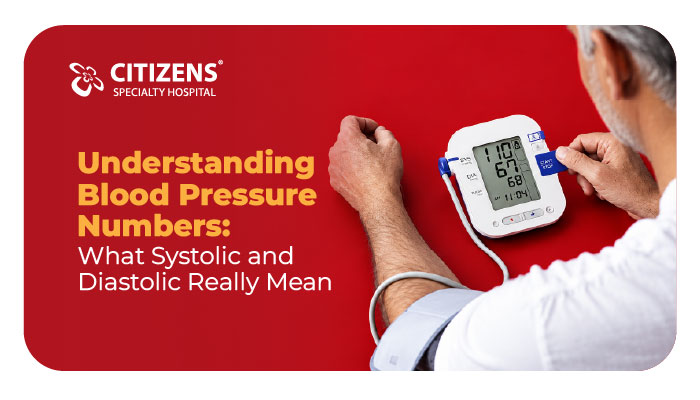
You've bought a home blood pressure monitor, wrapped the cuff around your arm and pressed start. The screen flashes three numbers: 138, 86 and 74. Now what?
Many people know that blood pressure is written as "top number over bottom number," but far fewer know how to read those numbers in everyday life. Why does your reading change from morning to evening? Why is it different at home and at the clinic? What does it mean if only one number is high? And when should a reading make you pick up the phone and call your doctor?
A Quick Refresher: The Two Numbers
The third number on most digital monitors is your pulse rate, the number of heartbeats per minute. It isn't part of your blood pressure, but it's useful information. A normal resting pulse for adults is generally between 60 and 100 beats per minute.
A simple way to picture it: think of a garden hose connected to a tap that turns on and off rhythmically. The surge when the tap opens is like systolic pressure. The pressure still in the hose when the tap briefly closes is like diastolic pressure.
Reading Your Results: Where Do Your Numbers Fall?
Here's a practical way to interpret clinic readings, based on widely used guidelines. Home readings are usually interpreted with slightly lower thresholds, discussed below.
If your systolic and diastolic readings fall into different categories, your blood pressure is classified by the higher one.
Home Readings Use Different Targets
Blood pressure measured at home tends to be lower than at the clinic because you're more relaxed. For this reason, many guidelines consider an average home reading of 135/85 mmHg or higher to indicate high blood pressure. Ask your doctor what home target applies to you.
When Only One Number Is High
High Systolic, Normal Diastolic
Called isolated systolic hypertension, this is the most common form of high blood pressure in people over 50. It usually results from arteries becoming stiffer with age. It's not harmless: it raises the risk of stroke and heart disease and generally needs treatment.
High Diastolic, Normal Systolic
Called isolated diastolic hypertension, this is more common in younger adults, often linked to weight gain, inactivity, high salt intake or alcohol. It may progress to combined high blood pressure over time.
Both Numbers High
This is classic hypertension and needs medical evaluation and management.
Why Your Numbers Keep Changing
Blood pressure isn't a fixed value. It changes minute to minute. Common reasons for variation include:
This is why doctors look at patterns and averages, not a single number.
How to Measure Blood Pressure Correctly at Home
Accurate readings depend on the right technique.
Choose the Right Device
Before You Measure
Position Matters
Take Multiple Readings
Keep a Log
Record:
Bring your log, and occasionally your monitor, to your doctor's appointment.
Arm-to-Arm Differences
It's normal for blood pressure to differ slightly between arms. At your first check, measure both arms. If one arm consistently reads higher, use that arm going forward. A consistent difference of more than about 10 to 15 mmHg in systolic pressure should be reported to your doctor, as it may indicate narrowing of an artery.
Blood Pressure That Drops When You Stand
Some people notice dizziness when they stand up quickly. This may be due to orthostatic hypotension, a drop in blood pressure on standing, generally defined as a fall of at least 20 mmHg systolic or 10 mmHg diastolic within three minutes of standing. It's more common in older adults, people with diabetes, those who are dehydrated and people taking certain medicines. Tell your doctor if you often feel light-headed on standing.
When a Reading Needs Urgent Attention
Seek emergency medical care if your blood pressure is 180/120 mmHg or higher and you have any of the following:
If you have a very high reading without symptoms, rest for five minutes and measure again. If it remains very high, contact your doctor promptly.
Also contact your doctor if you have very low readings with dizziness, fainting or confusion.
Common Mistakes People Make
Conclusion
Understanding your systolic and diastolic numbers is more than knowing definitions. It's about measuring correctly, recognising normal variations, knowing what different patterns mean and acting on the readings that matter. Regular, accurate monitoring gives you and your doctor the information needed to protect your heart, brain and kidneys.