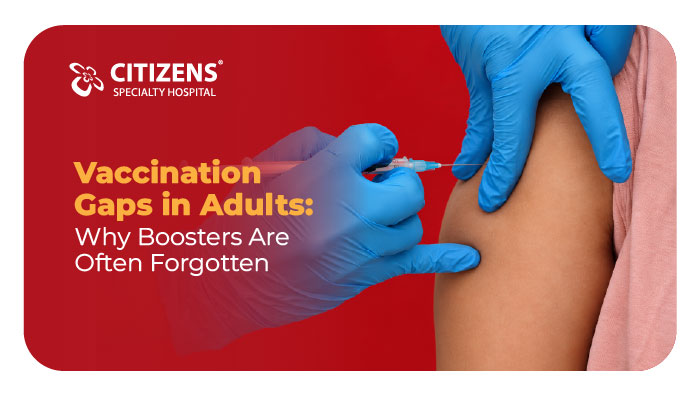
Vaccination Gaps in Adults: Why Boosters Are Often Forgotten
Most parents carefully track their child's vaccination card, making sure every dose is given on time.
But once we become adults, vaccines tend to slip off the radar. Many adults can't remember their
last tetanus shot, have never had a flu vaccine, and aren't aware that vaccines exist to protect
against pneumonia, shingles or cervical cancer.
Immunity from some childhood vaccines fades over time, new risks appear with age, and certain
health conditions make infections more dangerous. Adult vaccination is an important but often
overlooked part of preventive healthcare.
Why Adults Need Vaccines
Immunity Can Wane
Protection from some vaccines weakens over the years. Tetanus and diphtheria vaccines, for
example, need periodic boosters to maintain protection.
Some Vaccines Weren't Available Earlier
Many adults grew up before certain vaccines, such as those for hepatitis B, HPV or chickenpox,
were widely used.
Age Increases Risk
As we age, the immune system becomes less efficient. Infections such as influenza, pneumonia and
shingles become more common and more severe in older adults.
Chronic Conditions Increase Vulnerability
People with diabetes, heart disease, lung disease, kidney disease, liver disease or weakened
immunity face a higher risk of complications from preventable infections.
Protecting Others
Vaccinated adults help protect babies too young for certain vaccines, elderly family members and
people with weak immune systems.
Why Adults Forget or Skip Vaccines
- Lack of awareness: Many adults simply don't know that vaccines are recommended for
them.
- No tracking system: Unlike children, adults rarely have a vaccination card.
- Focus on treatment rather than prevention: Many people see a doctor only when unwell.
- Belief that vaccines are "for kids": A common misconception.
- Concerns about side effects: Fear of reactions, often based on myths.
- Busy schedules: Preventive health gets postponed.
- Cost concerns: Although many vaccines are affordable compared with treating the disease.
- Doctors not asking: Vaccination may not come up during visits for other issues.
Key Vaccines for Adults
Recommendations vary depending on age, health status, occupation, travel and previous
vaccination history. Your doctor will guide you on which vaccines you need. Commonly
recommended adult vaccines include:
Tetanus, Diphtheria and Pertussis (Td/Tdap)
- A booster is generally recommended every 10 years
- A booster may be needed sooner after a deep or dirty wound
- Tdap is recommended during each pregnancy to protect newborns from whooping cough
- Adults in close contact with infants may also benefit from Tdap
Influenza (Flu) Vaccine
- Recommended once every year, as flu viruses change frequently
- Particularly important for adults over 50, pregnant women, healthcare workers and people
with chronic conditions
- Reduces the risk of severe illness, hospitalisation and complications like pneumonia
Pneumococcal Vaccines
- Protect against pneumococcal infections, including pneumonia, meningitis and
bloodstream infections
- Generally recommended for adults over 65 in many guidelines
- Recommended for younger adults with conditions such as diabetes, chronic heart, lung,
kidney or liver disease, smokers and people with weakened immunity
Hepatitis B Vaccine
- Protects against hepatitis B, a leading cause of chronic liver disease and liver cancer
- Recommended for adults who haven't been vaccinated, especially healthcare workers,
people with diabetes, kidney disease, multiple sexual partners, or household contacts of
people with hepatitis B
- Usually given as a series of doses
Hepatitis A Vaccine
- Protects against hepatitis A, spread through contaminated food and water
- Recommended for people with chronic liver disease, travellers and those at higher risk
- Many adults in India have natural immunity from past infection; your doctor may suggest
testing first
Human Papillomavirus (HPV) Vaccine
- Protects against HPV types that cause cervical cancer, as well as other cancers and genital
warts
- Most effective when given before exposure to HPV, ideally in adolescence
- Recommended for young adults who weren't vaccinated earlier, and may be considered for
some older adults after discussion with a doctor
Shingles (Herpes Zoster) Vaccine
- Shingles is a painful rash caused by reactivation of the chickenpox virus, which stays
dormant in the body
- Risk increases after age 50
- Vaccination reduces the risk of shingles and its long-term nerve pain (post-herpetic
neuralgia)
- Recommended for adults 50 and above in many guidelines, and for some younger adults
with weakened immunity
Measles, Mumps and Rubella (MMR)
- Recommended for adults who lack evidence of immunity
- Especially important for women planning pregnancy, as rubella during pregnancy can cause
serious birth defects
- Should not be given during pregnancy
Varicella (Chickenpox)
- Recommended for adults who've never had chickenpox or the vaccine
- Chickenpox can be more severe in adults than in children
- Not given during pregnancy
Typhoid Vaccine
- Recommended for people living in or travelling to areas where typhoid is common
- Booster doses may be needed depending on the vaccine type
Are Adult Vaccines Safe?
Vaccines go through extensive testing before approval and are continuously monitored for safety.
Most side effects are mild and short-lived, such as:
- Soreness, redness or swelling at the injection site
- Mild fever
- Tiredness or body aches
Serious reactions are rare. Tell your doctor about allergies, pregnancy, immune conditions or
reactions to previous vaccines.
How to Close Your Vaccination Gaps
- Ask your doctor at your next check-up about which vaccines you need
- Check your records to see what you've received in the past
- Start an adult vaccination card or keep a digital record
- Set reminders for annual flu shots and 10-year tetanus boosters
- Plan ahead before pregnancy, travel or surgery
- Include vaccines in your annual health check-up
Conclusion
Vaccines aren't just for children. Adults need boosters and new vaccines to stay protected against
serious but preventable infections, especially as they age or develop chronic conditions. A quick
conversation with your doctor can reveal gaps you didn't know you had.