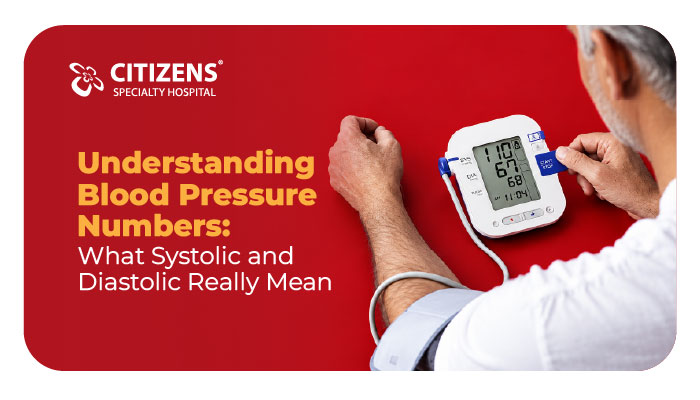
"Your BP is 130 over 85." Most of us have heard a doctor say something like this, nodded, and left without really knowing what the two numbers mean. Is the top number more important? Is the bottom number something to worry about? When does a reading move from "fine" to "a problem"?
High blood pressure, or hypertension, is often called the "silent killer" because it usually causes no symptoms while quietly damaging the heart, brain, kidneys and blood vessels. In India, a large proportion of adults have high blood pressure, and many are unaware of it. Understanding your numbers is the first step in protecting yourself.
What Is Blood Pressure?
Blood pressure is the force that circulating blood exerts against the walls of your arteries. Every time your heart beats, it pumps blood into the arteries, creating pressure. Between beats, the heart relaxes and the pressure falls.
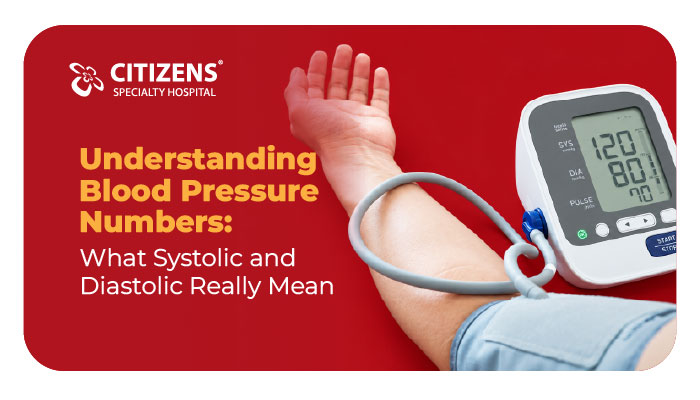
Blood pressure is measured in millimetres of mercury (mmHg) and written as two numbers, for example, 120/80 mmHg.
The Top Number: Systolic Pressure
Systolic pressure is the pressure in your arteries when your heart contracts and pushes blood out. It is the higher of the two numbers and represents the peak pressure during each heartbeat.
Why Systolic Pressure Matters
The Bottom Number: Diastolic Pressure
Diastolic pressure is the pressure in your arteries when your heart is resting between beats and filling with blood. It is the lower of the two numbers.
Why Diastolic Pressure Matters
Which Number Is More Important?
Both numbers matter. Research shows that high readings in either number increase the risk of heart disease and stroke. That said, because systolic pressure tends to rise with age and is strongly linked to cardiovascular events, doctors often pay close attention to it, particularly in middle-aged and older adults.
The best approach is to look at both numbers together, along with your overall health profile.
Blood Pressure Categories
Different guidelines use slightly different thresholds. A widely used classification from the American Heart Association and American College of Cardiology is:
Many other guidelines, including several used in India and Europe, define hypertension as a consistent reading of 140/90 mmHg or higher when measured in a clinic. Your doctor will interpret your readings based on the guideline they follow and your personal risk.
Note that when the two numbers fall into different categories, the higher category is used. For example, a reading of 125/92 is classified by the higher diastolic value.
What About Low Blood Pressure?
Low blood pressure, or hypotension, is generally considered a reading below about 90/60 mmHg. Many healthy, active people naturally have low readings without problems. It becomes a concern when it causes symptoms such as:
Low blood pressure can be caused by dehydration, certain medicines, blood loss, heart problems, hormonal conditions or severe infections. Sudden low blood pressure with symptoms needs medical evaluation.
Pulse Pressure: The Gap Between the Numbers
The difference between systolic and diastolic readings is called pulse pressure. For a reading of 120/80, the pulse pressure is 40.
Your doctor may consider pulse pressure as part of your overall cardiovascular assessment.
Why High Blood Pressure Is Dangerous
Over time, raised blood pressure damages the lining of blood vessels and forces the heart to work harder. This can lead to:
Symptoms of High Blood Pressure
Most people with high blood pressure feel perfectly well. When symptoms occur, usually at very high levels, they may include:
Because symptoms are unreliable, regular checks are the only way to know your blood pressure.
Who Is at Risk?
How Often Should You Check Your Blood Pressure?
Practical Ways to Keep Your Numbers Healthy
Conclusion
Your blood pressure reading is two numbers that tell an important story about your heart and blood vessels. The systolic number reflects pressure when the heart beats; the diastolic number reflects pressure when it rests. Both matter, and knowing where your readings fall helps you act early.
If you haven't had your blood pressure checked recently, or your readings have been creeping up, don't wait for symptoms. Book your test with Citizens Specialty Hospital and know your numbers today.