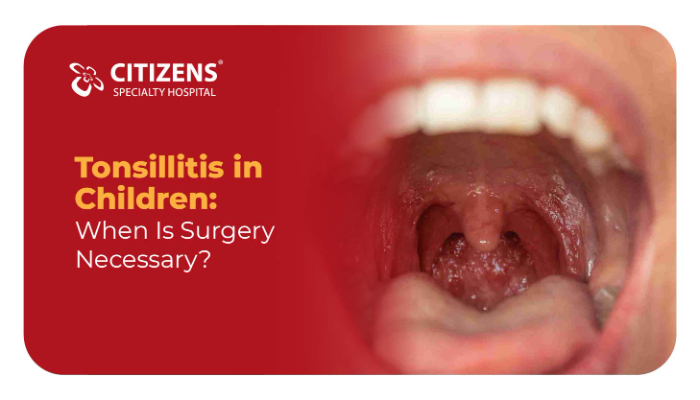
Tonsillitis is one of the most common childhood illnesses, causing sore throats, fever, and difficulty swallowing. While most children recover with medications and supportive care, some experience repeated episodes that significantly affect their health, school attendance, and quality of life. In such cases, parents often wonder whether surgery is the best option.
What Is Tonsillitis?
Tonsillitis refers to the inflammation of the tonsils, two oval-shaped pads of tissue located at the back of the throat. The tonsils are part of the body's immune system and help trap bacteria and viruses entering through the mouth and nose.
Although tonsils play a protective role, they can themselves become infected, leading to swelling and inflammation.
Tonsillitis is especially common in children between the ages of 3 and 15 years, though it can occur at any age.
What Causes Tonsillitis in Children?
Tonsillitis is usually caused by infections.
Viral Causes
Most cases of tonsillitis are caused by viruses, including:
Viral tonsillitis typically resolves on its own within a week.
Bacterial Causes
Bacterial infections account for a smaller proportion of cases. The most common bacterial cause is:
Streptococcal infections often require antibiotic treatment to prevent complications.
Signs and Symptoms of Tonsillitis
Symptoms may vary depending on the severity and cause of the infection.
Common symptoms include:
1. Sore Throat
Children may complain of pain while swallowing or refuse to eat due to discomfort.
2. Fever
A high fever often accompanies bacterial infections.
3. Swollen Tonsils
The tonsils may appear enlarged, red, or covered with white or yellow patches.
4. Difficulty Swallowing
Pain and swelling can make swallowing difficult.
5. Bad Breath
Persistent bad breath is common in infected tonsils.
6. Swollen Neck Glands
Lymph nodes in the neck may become enlarged and tender.
7. Voice Changes
Children may develop a muffled or hoarse voice.
8. Ear Pain
Pain can radiate to the ears due to shared nerve pathways.
9. Irritability and Fatigue
Younger children may become cranky, sleepy, or less active.
How Is Tonsillitis Diagnosed?
Diagnosis generally involves:
Medical History
The doctor asks about:
Physical Examination
The throat, tonsils, ears, and neck are examined for signs of infection.
Throat Swab
A throat swab may be taken to identify streptococcal infection.
Blood Tests
Occasionally, blood tests are ordered to rule out conditions such as infectious mononucleosis.
Treatment Options for Tonsillitis
Most children recover without surgery.
1. Supportive Care
For viral infections, treatment focuses on symptom relief:
2. Antibiotics
If bacterial infection is confirmed or strongly suspected, antibiotics may be prescribed.
It is important to complete the entire course, even if symptoms improve early.
3. Monitoring
Children with occasional infections are usually monitored over time before considering surgery.
What Is Tonsil Surgery?
Surgical removal of the tonsils is known as tonsillectomy.
It is one of the most frequently performed pediatric surgeries worldwide. The procedure is typically done under general anesthesia and usually takes about 30 to 60 minutes.
Most children go home on the same day.
When Is Surgery Necessary?
Not every child with tonsillitis needs surgery. Tonsillectomy is recommended only when the benefits outweigh the risks.
Below are the most common situations in which surgery may be advised.
1. Recurrent Tonsillitis
Repeated episodes of tonsillitis are the most common reason for surgery.
Doctors often follow established criteria when recommending tonsillectomy.
Surgery may be considered if a child experiences:
Each episode should ideally be documented and accompanied by features such as:
Frequent infections can disrupt daily life, cause repeated antibiotic use, and affect overall well-being.
2. Obstructive Sleep Apnea
Enlarged tonsils can block the airway during sleep.
This condition, known as obstructive sleep apnea (OSA), is another major indication for surgery.
Symptoms include:
Children with sleep-disordered breathing often show significant improvement after tonsillectomy.
3. Difficulty Eating or Poor Growth
Very large tonsils may interfere with:
Children who struggle to eat because of enlarged tonsils may develop nutritional deficiencies or poor growth.
Surgery may be recommended if the enlarged tonsils significantly impact nutrition and development.
4. Peritonsillar Abscess
A peritonsillar abscess is a collection of pus beside the tonsil.
Symptoms include:
Children who experience recurrent abscesses or fail medical treatment may require tonsil removal.
5. Chronic Tonsillitis
Some children develop persistent inflammation that lasts for months despite medical treatment.
Symptoms may include:
If symptoms significantly affect quality of life, surgery may be considered.
6. Recurrent Streptococcal Infections
Repeated strep throat infections despite appropriate antibiotic treatment may indicate the need for tonsillectomy.
Frequent bacterial infections can lead to:
Surgery can reduce future infections in carefully selected patients.
7. Suspicion of Tumor or Abnormal Growth
Though rare in children, asymmetrical enlargement or unusual appearance of the tonsils may require surgical removal for evaluation.
Situations Where Surgery May Not Be Necessary
Many children with tonsillitis do not need surgery.
Tonsillectomy is usually not recommended when:
Children often experience fewer infections as they grow older.
Benefits of Tonsillectomy
When performed for appropriate indications, tonsillectomy offers several advantages.
Reduced Infections
Children may experience fewer throat infections after surgery.
Improved Sleep
Removal of enlarged tonsils can significantly improve sleep quality.
Better School Attendance
Reduced illness often means fewer missed school days.
Improved Growth and Development
Better sleep and eating habits contribute to healthier growth.
Enhanced Quality of Life
Children frequently experience improved energy levels and overall well-being.
Risks of Tonsil Surgery
Like all surgeries, tonsillectomy carries certain risks.
Possible complications include:
Bleeding
Bleeding can occur during or after surgery and may occasionally require medical attention.
Pain
Throat pain is common for 7 to 14 days after surgery.
Dehydration
Children may avoid drinking due to pain, increasing the risk of dehydration.
Infection
Postoperative infections are uncommon but possible.
Anesthesia Risks
Complications related to anesthesia are rare but can occur.
Fortunately, tonsillectomy is generally considered a safe procedure when performed by experienced specialists.
What to Expect After Surgery
Recovery usually takes one to two weeks.
Parents should expect:
First Few Days
Home Care Tips
When to Seek Immediate Medical Attention
Contact a healthcare provider immediately if the child develops:
Can Tonsillitis Be Prevented?
While it is impossible to prevent all infections, certain measures may reduce the risk.
Parents can encourage children to:
Conclusion
Tonsillitis is a common childhood condition that usually responds well to medications and supportive care. However, repeated infections, breathing difficulties during sleep, poor growth, or complications may indicate the need for tonsillectomy.
The decision to proceed with surgery should be individualized and made in consultation with a pediatrician and an ENT specialist. Careful evaluation ensures that children who truly benefit from surgery receive timely treatment while avoiding unnecessary procedures.