Heart valve disease affects millions of people worldwide, particularly older adults. When a heart valve becomes severely narrowed or damaged, replacing the valve may be the best treatment option. Today, patients have more options than ever before, with two primary procedures available: Transcatheter Aortic Valve Replacement (TAVR) and traditional Surgical Aortic Valve Replacement (SAVR).
Choosing between these procedures can feel overwhelming. Factors such as age, overall health, lifestyle, and the severity of heart disease all play an important role in determining the most suitable treatment.
Understanding Aortic Valve Disease
The heart contains four valves that ensure blood flows in the correct direction. The aortic valve is one of the most important valves, allowing oxygen-rich blood to flow from the heart to the rest of the body.
Over time, the aortic valve may become damaged due to:
One of the most common valve problems is aortic stenosis, a condition in which the valve becomes narrowed and stiff, restricting blood flow.
Common Symptoms of Severe Aortic Stenosis
Once symptoms appear, valve replacement is often necessary to improve survival and quality of life.
What Is Surgical Aortic Valve Replacement (SAVR)?
Surgical Aortic Valve Replacement, commonly known as open-heart valve surgery, has been the standard treatment for severe aortic stenosis for decades.
During SAVR:
The replacement valve may be:
Mechanical Valve
Biological (Tissue) Valve
What Is TAVR?
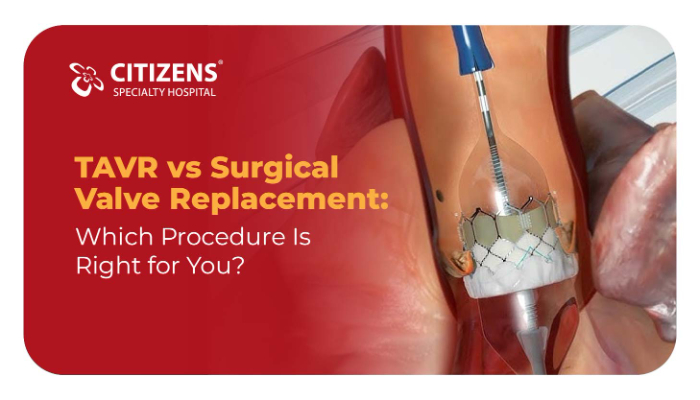
Transcatheter Aortic Valve Replacement (TAVR), previously called TAVI (Transcatheter Aortic Valve Implantation), is a minimally invasive procedure used to replace a diseased aortic valve.
Unlike traditional surgery, TAVR does not require opening the chest.
How TAVR Is Performed
The old valve is not removed; instead, the new valve pushes the damaged leaflets aside and takes over their function.
Most patients undergo TAVR under conscious sedation or general anesthesia.
Key Differences Between TAVR and SAVR
| Feature | TAVR | Surgical Valve Replacement |
|---|---|---|
| Procedure type | Minimally invasive | Open-heart surgery |
| Chest incision | Small puncture/incision | Large chest incision |
| Heart-lung machine | Usually not required | Required |
| Hospital stay | 1–3 days | 5–10 days |
| Recovery time | 1–3 weeks | 6–12 weeks |
| Anesthesia | Sedation or general anesthesia | General anesthesia |
| Valve removal | Old valve remains | Old valve removed |
| Suitable for | Many elderly/high-risk patients | Younger and healthier patients |
| Long-term durability | Good, still being studied long term | Proven durability |
Benefits of TAVR
TAVR has transformed treatment for many patients who previously could not undergo surgery.
1. Minimally Invasive
No large chest incision is required, resulting in less trauma to the body.
2. Faster Recovery
Most patients:
3. Reduced Hospital Stay
Patients often leave the hospital within 24 to 72 hours.
4. Less Pain
Because there is no sternotomy, postoperative discomfort is usually less severe.
5. Ideal for Older Adults
Many elderly individuals who are considered high-risk for open-heart surgery can safely undergo TAVR.
6. Lower Immediate Surgical Risk
For selected patients, TAVR may reduce complications associated with major surgery.
Potential Risks of TAVR
Although TAVR is less invasive, it still carries risks.
Possible complications include:
Some patients undergoing TAVR have a higher likelihood of requiring a pacemaker compared with surgical replacement.
Benefits of Surgical Valve Replacement
SAVR remains an excellent treatment option for many individuals.
1. Long-Term Durability
Surgical valves have decades of proven effectiveness.
Mechanical valves, in particular, can last a lifetime.
2. Suitable for Younger Patients
Patients under 65 often benefit from surgery because of the durability of surgical valves.
3. Complete Removal of Diseased Valve
The damaged valve is removed entirely, which may reduce certain complications.
4. Lower Risk of Valve Leakage
Surgery generally has lower rates of paravalvular leak.
5. Ability to Address Other Heart Conditions
During surgery, surgeons can simultaneously treat:
Potential Risks of Surgical Valve Replacement
Open-heart surgery is a major procedure and involves:
Older adults and individuals with multiple medical conditions may face higher surgical risks.
Who Is a Good Candidate for TAVR?
TAVR was initially approved for patients considered too sick for surgery. However, advances in technology have expanded eligibility.
You may be a good candidate for TAVR if you:
TAVR is increasingly being used even in low-risk patients, although age and life expectancy remain important considerations.
Who Is a Good Candidate for Surgical Valve Replacement?
Surgery may be preferred if you:
Many younger patients benefit from the durability and long-term outcomes associated with surgical replacement.
Factors Doctors Consider When Choosing Between TAVR and SAVR
Selecting the right procedure requires evaluation by a multidisciplinary Heart Team, which may include cardiologists, cardiac surgeons, anesthesiasts, and imaging specialists.
Age
Age significantly influences treatment decisions.
Overall Health
Doctors assess:
Patients with multiple illnesses may benefit from TAVR.
Surgical Risk
Risk scores help estimate the safety of surgery.
Patients are classified as:
Valve Anatomy
Detailed imaging tests determine whether anatomy is suitable for TAVR.
Tests may include:
Life Expectancy
Longer life expectancy may favor surgery because of its established durability.
Patient Preferences
Personal preferences regarding:
Recovery After TAVR
Recovery following TAVR is generally rapid.
Most patients:
Patients are encouraged to:
Recovery After Surgical Valve Replacement
Recovery from surgery requires more time.
Typical milestones include:
Patients may experience:
Cardiac rehabilitation significantly improves recovery and long-term outcomes.
Long-Term Outcomes: TAVR vs SAVR
Studies have shown that both TAVR and SAVR provide excellent outcomes in appropriately selected patients.
TAVR
SAVR
Current research suggests that both procedures offer similar survival rates in many low- risk and intermediate-risk populations when patients are carefully selected.
Conclusion
Both TAVR and Surgical Aortic Valve Replacement are highly effective treatments for severe aortic valve disease. The right choice depends on several factors, including age, overall health, valve anatomy, lifestyle, and personal preferences.
TAVR offers a minimally invasive approach with quicker recovery, making it particularly attractive for older adults and patients at increased surgical risk. Surgical valve replacement, however, remains the preferred option for many younger individuals and those requiring long-term durability or additional cardiac procedures.