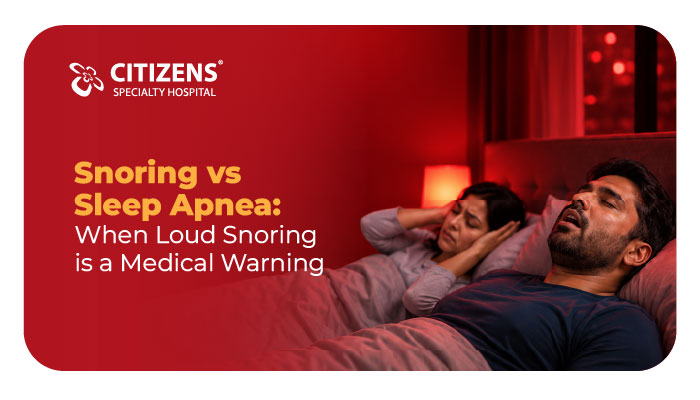
Snoring is often treated as a joke or a minor annoyance, the reason a partner moves to another room or family members tease each other over breakfast. And for many people, snoring is harmless.
But loud, persistent snoring can also be the most noticeable sign of obstructive sleep apnea (OSA), a serious sleep disorder in which breathing repeatedly stops and starts during sleep. Left untreated, sleep apnea is linked to high blood pressure, heart disease, stroke, diabetes and accidents caused by daytime sleepiness.
What Causes Snoring?
Snoring happens when air flows past relaxed tissues in the throat, causing them to vibrate. During sleep, the muscles in the throat, tongue and soft palate relax, narrowing the airway. The narrower the airway, the louder the vibration.
Common contributors include:
What Is Obstructive Sleep Apnea?
In obstructive sleep apnea, the airway doesn't just narrow; it partially or completely collapses during sleep. Breathing stops (apnea) or becomes very shallow (hypopnea) for 10 seconds or longer. Oxygen levels in the blood drop, and the brain briefly wakes the body to restart breathing, usually with a snort or gasp.
These pauses can happen dozens or even hundreds of times a night. Most people don't remember waking up, but their sleep is fragmented and unrefreshing.
Simple Snoring vs Sleep Apnea: Key Differences
Simple Snoring
Possible Sleep Apnea
Warning Signs of Sleep Apnea
Night-time Signs
Daytime Signs
Who Is at Higher Risk?
The STOP-BANG Questionnaire: A Quick Self-Check
Doctors often use the STOP-BANG questionnaire to screen for sleep apnea. Answer yes or no to each:
Answering yes to three or more questions suggests a higher risk of obstructive sleep apnea. This is a screening tool, not a diagnosis, but it's a good reason to speak with a doctor.
Why Sleep Apnea Is Dangerous
Repeated drops in oxygen and constant disruption of sleep put stress on the body. Untreated sleep apnea is associated with:
Sleep Apnea in Children
Children can also have sleep apnea, often due to enlarged tonsils or adenoids. Signs include loud snoring, mouth breathing, restless sleep, bedwetting, hyperactivity, poor school performance and behavioural problems. Children with these signs should be evaluated by a paediatrician or ENT specialist.
How Sleep Apnea Is Diagnosed
Clinical Evaluation
Your doctor will ask about your sleep, daytime symptoms and medical history, and examine your nose, throat, neck and jaw.
Sleep Study (Polysomnography)
A sleep study is the standard test for diagnosing sleep apnea. It records:
The results give an apnea-hypopnea index (AHI), the average number of breathing interruptions per hour:
In selected cases, a home sleep test may be used.
Treatment Options
Lifestyle Changes
CPAP Therapy
Continuous positive airway pressure (CPAP) is the most effective treatment for moderate to severe sleep apnea. A small machine delivers gentle air pressure through a mask, keeping the airway open during sleep. Many people notice better sleep, more energy and improved concentration within days or weeks.
Oral Appliances
Custom-made dental devices that move the lower jaw forward can help people with mild to moderate sleep apnea or those who can't tolerate CPAP.
Surgery
In some cases, surgery may be considered to correct nasal blockages, remove enlarged tonsils or adenoids, or reposition structures in the throat or jaw.
Tips to Reduce Snoring
Conclusion
Snoring is sometimes just snoring. But when it's loud, frequent and accompanied by gasping, breathing pauses or daytime tiredness, it may be a sign of sleep apnea, a condition that affects your heart, brain and overall health. The good news is that sleep apnea is highly treatable once diagnosed.
If you or your partner has noticed warning signs, don't dismiss them. Book your test with Citizens Specialty Hospital for a sleep evaluation and breathe easier tonight.