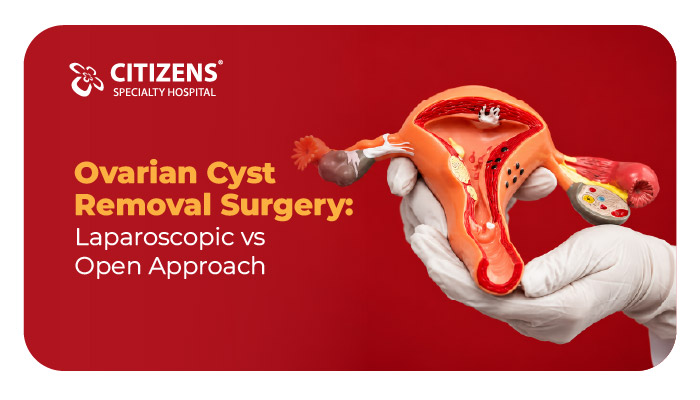
Ovarian cysts are fluid-filled sacs that develop on or inside an ovary. Most are harmless and resolve on their own, but some grow large, cause pain, or raise concerns about malignancy, making surgical removal necessary. If your gynecologist has recommended ovarian cyst removal surgery, understanding the difference between the laparoscopic and open surgical approaches can help you feel more prepared and confident about your treatment journey.
What Is an Ovarian Cyst?
An ovarian cyst is a sac containing fluid or semi-solid material that forms on the ovary. Common types include:
While many cysts shrink without treatment, surgery becomes necessary when a cyst is large, persistent, causing pain, twisting the ovary (torsion), or shows features suspicious for cancer.
When Is Ovarian Cyst Removal Surgery Needed?
Your doctor may recommend surgical removal if you experience:
Laparoscopic Ovarian Cyst Removal
Laparoscopic surgery, often called “keyhole surgery,” is the most common approach for removing ovarian cysts today.
How It Works
The surgeon makes three or four small incisions (typically 0.5–1 cm) in the abdomen. A laparoscope—a thin tube with a camera and light—is inserted through one incision, allowing the surgeon to view the pelvic organs on a monitor. Specialized instruments passed through the other incisions are used to carefully remove the cyst while preserving healthy ovarian tissue whenever possible.
Advantages of Laparoscopy
Limitations
Laparoscopy may not be suitable for very large cysts, cysts with a high suspicion of cancer, or in cases of extensive pelvic adhesions from prior surgery or severe endometriosis.
Open Ovarian Cyst Removal (Laparotomy)
An open approach involves a single larger incision in the lower abdomen, similar to a C- section incision.
When Open Surgery Is Preferred
What to Expect
Open surgery allows the surgeon direct hands-on access to the pelvic and abdominal organs, which is valuable when a cancer diagnosis is suspected and complete surgical staging may be required. However, it comes with:
Laparoscopic vs Open: A Side-by-Side Comparison
Types of Procedures Performed
Depending on your age, fertility goals, and cyst characteristics, your surgeon may perform:
Preparing for Surgery
Before your procedure, your care team will likely recommend:
Recovery After Ovarian Cyst Surgery
Laparoscopic Recovery
Open Surgery Recovery
General Recovery Tips
Risks and Complications
Both approaches carry general surgical risks, including bleeding, infection, and reaction to anesthesia. Specific risks include:
Impact on Fertility
Many women worry about how cyst removal will affect their ability to conceive. In most cases, especially with cystectomy that preserves the ovary, fertility is not significantly affected. Your surgeon will discuss ovarian reserve and any fertility-related concerns based on your specific situation, particularly if both ovaries are involved.
Conclusion
Choosing between laparoscopic and open ovarian cyst removal depends on the size and nature of the cyst, your medical history, and whether malignancy is suspected. Laparoscopy offers a minimally invasive option with quicker recovery for most benign cysts, while open surgery remains essential for complex or suspicious cases. Discussing your specific situation with an experienced gynecologic surgeon will help determine the safest and most effective approach for you.
Frequently Asked Questions
Q: Will I need general anesthesia for cyst removal surgery? A: Yes, both laparoscopic and open ovarian cyst removal are typically performed under general anesthesia.
Q: How long does the surgery itself take? A: Laparoscopic procedures usually take 30–90 minutes, while open surgery may take longer depending on complexity.
Q: Can ovarian cysts come back after removal? A: Yes, particularly functional cysts. However, removal of the cyst wall (cystectomy) reduces recurrence risk compared to simple drainage.
Q: Is laparoscopic surgery always possible? A: Not always. Very large cysts, suspected cancer, or extensive adhesions may require an open approach for safety and thoroughness.
Q: When can I return to work after surgery? A: Most women return to desk jobs within 1–2 weeks after laparoscopy and 4–6 weeks after open surgery, depending on individual recovery and job demands.