Pregnancy is an exciting and life-changing journey, and one of the most important decisions expectant mothers often think about is how they will deliver their baby. While some women have a clear preference for either a normal vaginal delivery or a Caesarean section (C-section), the final mode of delivery often depends on several medical and personal factors.
Understanding the differences between normal delivery and C-section can help mothers make informed decisions, reduce anxiety, and prepare better for childbirth. Both methods are safe and widely practiced, and the primary goal in every birth is the health and safety of both mother and baby.
What Is Normal Delivery?
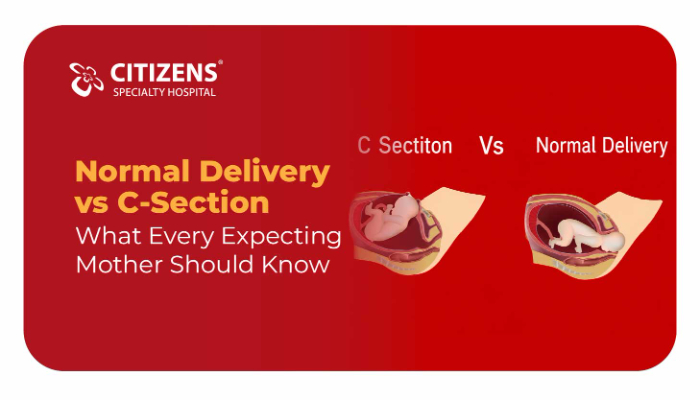
Normal delivery, also known as vaginal birth, is the natural process by which a baby is born through the birth canal without major surgical intervention.
During labor, the cervix gradually dilates, uterine contractions help move the baby down the birth canal, and the mother pushes the baby out through the vagina.
A normal delivery may occur:
The process usually consists of three stages:
Stage 1: Labor and Cervical Dilation
This stage begins with regular contractions and continues until the cervix is fully dilated to 10 centimeters.
Stage 2: Delivery of the Baby
Once fully dilated, the mother pushes, and the baby is delivered.
Stage 3: Delivery of the Placenta
After the baby is born, the placenta is expelled.
What Is a C-Section?
A Caesarean section (C-section) is a surgical procedure in which the baby is delivered through incisions made in the mother's abdomen and uterus.
A C-section may be:
Planned (Elective)
Scheduled before labor due to known medical reasons.
Emergency
Performed during labor when complications arise that make vaginal birth unsafe.
The surgery is usually performed under spinal or epidural anesthesia, allowing the mother to remain awake while preventing pain.
The entire procedure typically takes about 45–60 minutes, although the baby is usually delivered within the first 10–15 minutes.
Why Might a C-Section Be Necessary?
Although vaginal delivery is generally preferred when medically feasible, certain conditions may necessitate a C-section.
Common reasons include:
1. Fetal Distress
If the baby's heart rate indicates inadequate oxygen supply, an urgent C-section may be required.
2. Breech Presentation
When the baby is positioned feet-first or buttocks-first rather than head-down.
3. Placenta Previa
The placenta partially or completely covers the cervix, blocking the baby's passage.
4. Multiple Pregnancy
Twins, triplets, or higher-order pregnancies sometimes require surgical delivery.
5. Prolonged or Obstructed Labor
Labor that fails to progress despite adequate contractions may necessitate surgery.
6. Previous C-Section
Some women with prior C-sections may need repeat surgery, though vaginal birth after Caesarean (VBAC) is possible in selected cases.
7. Maternal Health Conditions
Conditions such as:
may make a C-section safer.
8. Large Baby (Macrosomia)
A significantly large baby may increase the risk of difficult vaginal delivery.
Normal Delivery vs C-Section: Key Differences
| Feature | Normal Delivery | C-Section |
|---|---|---|
| Procedure | Natural birth through vagina | Surgical birth through abdominal incision |
| Hospital Stay | Usually 1–2 days | Usually 3–5 days |
| Recovery Time | Faster | Longer |
| Pain After Delivery | Generally less long-term pain | More postoperative discomfort |
| Risk of Surgery | Minimal | Higher due to major surgery |
| Future Pregnancies | Usually fewer restrictions | May affect future pregnancies |
| Ability to Move | Earlier mobility | Delayed mobility |
| Cost | Usually lower | Usually higher |
Advantages of Normal Delivery
1. Faster Recovery
Women who deliver vaginally generally recover more quickly and can resume daily activities sooner.
2. Shorter Hospital Stay
Most mothers return home within a day or two.
3. Lower Risk of Surgical Complications
Since no major surgery is involved, there is less risk of:
4. Early Breastfeeding
Mothers often initiate breastfeeding sooner after vaginal birth.
5. Better Respiratory Adaptation for Babies
During vaginal birth, compression through the birth canal helps clear fluid from the baby's lungs, reducing breathing difficulties.
6. Improved Maternal Mobility
Early movement reduces the risk of complications such as deep vein thrombosis.
7. Beneficial Exposure to Maternal Microbiota
Babies born vaginally are exposed to beneficial bacteria that may contribute positively to immune development.
Disadvantages and Risks of Normal Delivery
Although safe for most women, vaginal delivery can have certain risks.
Possible Complications Include:
In rare situations, emergency intervention or C-section may become necessary.
Advantages of C-Section
1. Life-Saving in Emergencies
C-sections can prevent serious complications when vaginal birth poses risks.
2. Planned Scheduling
Elective C-sections allow families and healthcare teams to plan delivery timing.
3. Reduced Risk of Birth Trauma
In certain high-risk pregnancies, surgical delivery lowers the risk of injury to the baby.
4. Avoidance of Labor Complications
Women avoid prolonged labor and severe vaginal tears.
5. Helpful in Specific Medical Conditions
C-sections provide a safer option for mothers with certain obstetric or medical complications.
Risks and Disadvantages of C-Section
A C-section is a major abdominal surgery and carries additional risks.
Risks for the Mother
Infection
There is a possibility of infection at the incision site or within the uterus.
Excessive Bleeding
Blood loss is generally greater compared to vaginal delivery.
Blood Clots
Postoperative immobility increases the risk of clot formation.
Surgical Injury
Rarely, nearby organs such as the bladder or bowel may be injured.
Longer Recovery
Recovery can take several weeks.
Future Pregnancy Complications
Repeated C-sections may increase the risk of:
Risks for the Baby
Babies delivered by C-section may have:
Recovery After Normal Delivery
Recovery following vaginal birth varies among women but is generally quicker.
What to Expect
Recovery Tips
Most women resume routine activities within a few weeks.
Recovery After a C-Section
Recovery after a C-section requires more time and care.
Common Experiences
Recovery Tips
Complete recovery usually takes about six to eight weeks.
Can You Have a Normal Delivery After a C-Section?
Yes. Many women can have a successful Vaginal Birth After Caesarean (VBAC).
Eligibility depends on factors such as:
How Is the Decision Made?
The decision regarding delivery method should be individualized.
Healthcare providers consider:
Tips for Expecting Mothers
Prepare During Pregnancy
Conclusion
Both normal delivery and C-section have their own advantages, risks, and indications. Vaginal birth is generally associated with faster recovery and fewer surgical risks, while C-sections can be lifesaving when complications arise.
The best delivery method is the one that ensures the safety and well-being of both mother and baby. Rather than focusing on a particular mode of birth, expectant mothers should prioritize regular prenatal care, maintain open communication with their healthcare providers, and remain flexible as pregnancy and labor progress.