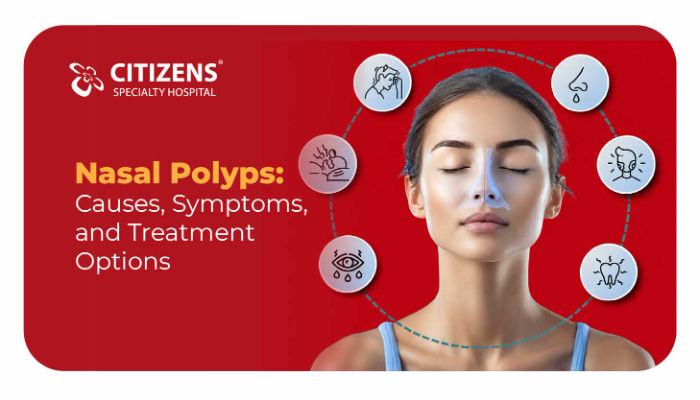
Nasal congestion that never seems to go away, a reduced sense of smell, or persistent sinus infections can significantly affect daily life. While these symptoms are often attributed to allergies or a common cold, they may be caused by nasal polyps. Nasal polyps are soft, painless growths inside the nasal passages or sinuses that can interfere with breathing and overall quality of life.
What Are Nasal Polyps?
Nasal polyps are benign (non-cancerous) growths that develop in the lining of the nose or paranasal sinuses due to chronic inflammation. They often resemble small, teardrop- shaped or grape-like swellings.
Small nasal polyps may not cause any symptoms and often go unnoticed. However, larger polyps or clusters of multiple polyps can obstruct the nasal passages, making it difficult to breathe properly.
Nasal polyps typically occur in both nostrils and are most found in areas where the sinuses drain into the nasal cavity.
How Common Are Nasal Polyps?
Nasal polyps affect approximately 1% to 4% of the general population. They are more frequently seen in adults over the age of 40 and are slightly more common in men than women.
Although less common in children, nasal polyps in younger individuals may indicate underlying conditions such as cystic fibrosis or immune system disorders.
Causes of Nasal Polyps
The exact cause of nasal polyps is not completely understood. However, researchers believe that long-term inflammation within the nasal lining plays a key role.
Persistent inflammation causes swelling of the mucous membrane lining the nose and sinuses. Over time, this swollen tissue can protrude and form polyps.
Several conditions are associated with chronic inflammation and increase the likelihood of developing nasal polyps.
1. Chronic Sinusitis
Chronic rhinosinusitis, especially when lasting more than 12 weeks, is one of the leading causes of nasal polyps. Continuous inflammation within the sinus cavities promotes tissue swelling and polyp formation.
2. Allergies
People with persistent allergies, such as allergic rhinitis (hay fever), may have ongoing nasal inflammation that contributes to the development of polyps.
Common allergens include:
3. Asthma
Many individuals with nasal polyps also have asthma. Inflammation affecting the airways and nasal passages often occurs together, making asthma an important risk factor.
4. Aspirin-Exacerbated Respiratory Disease (AERD)
Also known as Samter's triad, this condition consists of:
Patients with AERD often experience recurrent nasal polyps and severe sinus symptoms.
5. Genetic Factors
Some individuals may inherit a tendency to develop chronic inflammation or immune responses that predispose them to nasal polyps.
6. Immune System Disorders
Certain immune abnormalities and chronic inflammatory diseases may increase susceptibility to polyp formation.
Risk Factors for Nasal Polyps
Several factors increase the likelihood of developing nasal polyps, including:
Understanding these risk factors can help individuals seek medical evaluation sooner.
Symptoms of Nasal Polyps
Symptoms often develop gradually and may persist for months or years.
Persistent Nasal Blockage
One of the most common symptoms is ongoing nasal congestion or blockage that does not improve with standard cold medications.
Runny Nose
Individuals may experience continuous watery discharge from the nose.
Postnasal Drip
Mucus draining down the back of the throat can cause throat irritation, coughing, and frequent throat clearing.
Reduced or Lost Sense of Smell
A diminished sense of smell (hyposmia) or complete loss of smell (anosmia) is frequently associated with nasal polyps.
Reduced Sense of Taste
Because taste and smell are closely linked, patients often notice changes in taste perception.
Facial Pressure or Pain
Blocked sinuses may create a sensation of fullness, pressure, or discomfort around the forehead, cheeks, or eyes.
Frequent Sinus Infections
Nasal polyps can obstruct sinus drainage, leading to repeated infections.
Headaches
Chronic sinus obstruction may contribute to recurring headaches.
Snoring and Sleep Disturbances
Large polyps can interfere with normal breathing during sleep, causing:
When Should You See a Doctor?
Consult an ENT specialist if symptoms persist for more than 10 days or repeatedly return.
Seek immediate medical attention if you experience:
Early diagnosis can prevent complications and improve treatment outcomes.
How Are Nasal Polyps Diagnosed?
Diagnosis typically begins with a detailed medical history and physical examination.
1. Nasal Examination
An ENT specialist examines the inside of the nose using a lighted instrument to look for visible polyps.
2. Nasal Endoscopy
Nasal endoscopy is considered one of the most effective diagnostic methods.
A thin, flexible tube equipped with a camera is inserted into the nose, allowing the physician to closely inspect the nasal passages and sinuses.
3. CT scan of the Sinuses
Computed tomography (CT) imaging provides detailed images of the sinuses and helps determine:
4. Allergy Testing
Allergy testing may identify triggers contributing to chronic inflammation.
5. Additional Testing
In children or individuals with unusual presentations, further investigations may be performed to identify underlying conditions such as cystic fibrosis or immune deficiencies.
Treatment Options for Nasal Polyps
Treatment aims to reduce inflammation, shrink the polyps, restore nasal airflow, and prevent recurrence.
Medical Treatments
Most patients begin with medications.
1. Corticosteroid Nasal Sprays
Nasal steroid sprays are usually the first-line treatment.
These medications reduce inflammation and can shrink small polyps.
Commonly prescribed sprays include:
Regular use is essential for optimal effectiveness.
2. Oral Corticosteroids
For larger or severe polyps, doctors may prescribe short courses of oral steroids such as prednisone.
Benefits include:
However, long-term use is avoided because of potential side effects, including:
3. Biologic Medications
Newer biologic therapies have transformed the treatment of severe nasal polyps.
These injectable medications target specific inflammatory pathways.
Examples include:
Biologics may be recommended for patients with:
4. Saline Nasal Irrigation
Rinsing the nasal passages with saline solution helps:
Daily saline rinses are often recommended.
5. Treating Underlying Conditions
Managing associated diseases can reduce recurrence.
This may involve:
Surgical Treatment for Nasal Polyps
When medications fail to provide sufficient relief, surgery may be necessary.
Endoscopic Sinus Surgery
Functional Endoscopic Sinus Surgery (FESS) is the most performed procedure.
During surgery, the surgeon uses a small camera and specialized instruments inserted through the nostrils to:
No external incisions are usually required.
Benefits of Surgery
Surgery can:
Recovery After Surgery
Most patients recover within one to two weeks.
Postoperative care often includes:
Although surgery effectively removes existing polyps, it does not cure the underlying inflammation.
Can Nasal Polyps Come Back?
Yes. Recurrence is relatively common, especially in individuals with:
Long-term medical management is usually required to minimize recurrence.
Tips to Prevent Nasal Polyps
While complete prevention may not always be possible, these measures can lower the risk:
Control Allergies and Asthma
Follow prescribed treatment plans and avoid triggers whenever possible.
Practice Good Nasal Hygiene
Regular saline irrigation helps keep nasal passages clear.
Avoid Irritants
Limit exposure to:
Use Humidifiers
Maintaining adequate indoor humidity prevents excessive drying and irritation of nasal tissues.
Wash Hands Frequently
Good hygiene reduces the risk of respiratory infections that can worsen inflammation.
Living With Nasal Polyps
Living with nasal polyps can be challenging, especially when symptoms affect breathing, sleep, and daily activities. However, many people successfully manage their condition through a combination of medications, lifestyle modifications, and regular follow-up with an ENT specialist.
Early intervention and adherence to treatment plans can significantly improve symptoms and reduce the likelihood of recurrence.
Conclusion
Nasal polyps are common, non-cancerous growths caused by chronic inflammation within the nose and sinuses. Symptoms such as persistent nasal blockage, reduced sense of smell, postnasal drip, and recurrent sinus infections should not be ignored.
Accurate diagnosis through nasal examination, endoscopy, and imaging allows healthcare providers to determine the most appropriate treatment approach. Medical therapies, including corticosteroids and biologic medications, often provide significant relief, while endoscopic sinus surgery may be required for severe or recurrent cases.