Leukemia is a type of blood cancer that affects the body's ability to produce healthy blood cells. It begins in the bone marrow—the soft, spongy tissue inside bones where blood cells are formed. Leukemia develops when abnormal white blood cells grow uncontrollably, crowding out healthy blood cells and impairing the body's normal functions.
Although leukemia can affect people of all ages, certain types are more common in children, while others predominantly occur in adults. Advances in medical research, early diagnosis, and modern treatment approaches have significantly improved survival rates and quality of life for many patients.
What Is Leukemia?
Leukemia is a cancer of the blood-forming tissues, including the bone marrow and lymphatic system. Normally, the bone marrow produces stem cells that mature into:
In leukemia, the bone marrow produces abnormal white blood cells that do not function properly. These cancerous cells multiply rapidly and interfere with the production of normal blood cells, leading to various health complications.
Types of Leukemia
Leukemia is broadly classified based on:
1. How quickly it progresses
2. The type of blood cell affected
Combining these classifications results in four main types.
1. Acute Lymphoblastic Leukemia (ALL)
Acute Lymphoblastic Leukemia, also called Acute Lymphocytic Leukemia, is the most common childhood leukemia, though adults can also develop it.
Characteristics:
Common Symptoms:
Prognosis:
With early treatment, many children with ALL achieve long-term remission.
2. Acute Myeloid Leukemia (AML)
Acute Myeloid Leukemia affects myeloid cells and is more common in adults, especially older individuals.
Characteristics:
Symptoms:
Risk Factors:
3. Chronic Lymphocytic Leukemia (CLL)
CLL is the most common leukemia among adults, particularly those over 60 years of age.
Characteristics:
Symptoms:
Many individuals with early-stage CLL may not require immediate treatment and are closely monitored.
4. Chronic Myeloid Leukemia (CML)
Chronic Myeloid Leukemia primarily affects adults and typically progresses slowly.
Characteristics:
Symptoms:
Targeted therapies have dramatically improved outcomes for patients with CML.
Rare Types of Leukemia
Less common forms include:
Because these subtypes are uncommon, diagnosis and treatment often require specialized care.
Causes of Leukemia
The exact cause of leukemia is not fully understood. It is believed to develop due to genetic mutations in blood-forming cells that cause uncontrolled growth.
Most cases occur without a clear cause.
Risk Factors for Leukemia
Several factors may increase the likelihood of developing leukemia.
Age
Risk increases with age for many types, especially AML, CLL, and CML.
Previous Cancer Treatment
People who have undergone chemotherapy or radiation therapy may have a slightly increased risk.
Genetic Disorders
Certain inherited conditions can raise leukemia risk, including:
Exposure to Radiation
High levels of radiation exposure can increase risk.
Chemical Exposure
Long-term exposure to chemicals such as benzene has been associated with leukemia.
Smoking
Smoking significantly increases the risk of AML.
Family History
A family history of leukemia may modestly increase risk in some individuals.
Signs and Symptoms of Leukemia
Symptoms vary depending on the type and stage of disease. Some individuals may experience few symptoms initially.
Common symptoms include:
Persistent Fatigue
A shortage of healthy red blood cells can lead to anemia, causing tiredness and weakness.
Frequent Infections
Abnormal white blood cells cannot effectively fight infections.
Fever and Chills
Recurring fever without an obvious cause can be an early warning sign.
Easy Bruising and Bleeding
Low platelet counts may result in:
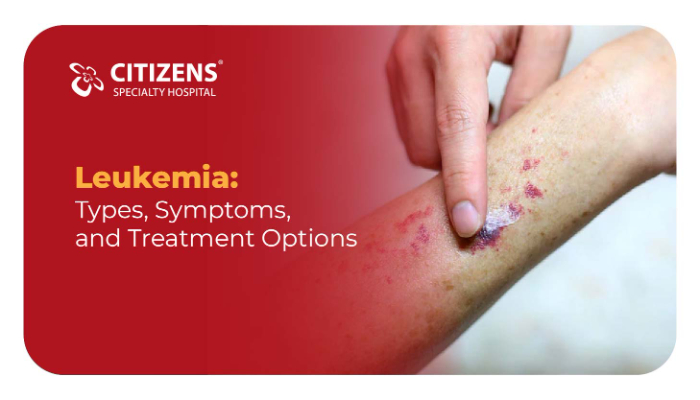
Petechiae
Tiny red or purple spots on the skin caused by bleeding under the skin.
Bone and Joint Pain
Crowding of abnormal cells within the bone marrow may cause discomfort.
Swollen Lymph Nodes
Enlarged lymph nodes may occur in the neck, armpits, or groin.
Enlarged Liver or Spleen
This may lead to:
Night Sweats
Excessive sweating during sleep is commonly reported.
Unexplained Weight Loss
Losing weight unintentionally may indicate an underlying illness.
When Should You See a Doctor?
Consult a healthcare professional if you experience:
Early evaluation improves the likelihood of timely diagnosis and treatment.
How Is Leukemia Diagnosed?
Diagnosis typically involves a combination of medical history, physical examination, laboratory tests, and specialized procedures.
1. Complete Blood Count (CBC)
A CBC measures:
Abnormal results may suggest leukemia.
2. Peripheral Blood Smear
A blood sample is examined under a microscope to identify abnormal cells.
3. Bone Marrow Aspiration and Biopsy
This is the definitive diagnostic test for leukemia.
A small sample of bone marrow is removed, usually from the hip bone, and analyzed in a laboratory.
4. Genetic and Molecular Testing
Advanced tests identify genetic abnormalities that help determine:
5. Imaging Studies
Additional tests may include:
These help assess disease spread and organ involvement.
Staging and Risk Assessment
Unlike many solid cancers, leukemia is not always staged traditionally.
Instead, specialists assess:
Risk stratification helps guide treatment decisions.
Treatment Options for Leukemia
Treatment depends on:
Common treatments include:
1. Chemotherapy
Chemotherapy uses medications to destroy leukemia cells.
It remains the cornerstone of treatment for many forms of leukemia.
Treatment may involve:
Common side effects include:
2. Targeted Therapy
Targeted drugs specifically attack cancer cells while minimizing damage to healthy cells.
Examples include:
These therapies have transformed outcomes in several leukemia subtypes.
3. Immunotherapy
Immunotherapy helps the body's immune system recognize and attack cancer cells.
Options include:
Monoclonal Antibodies
Laboratory-made antibodies target specific proteins on leukemia cells.
CAR T-Cell Therapy
Patient immune cells are genetically modified to attack leukemia.
CAR T-cell therapy has shown remarkable success in certain relapsed or resistant leukemias.
4. Radiation Therapy
Radiation uses high-energy beams to destroy cancer cells.
It may be used:
5. Stem Cell or Bone Marrow Transplant
A stem cell transplant replaces diseased bone marrow with healthy blood-forming stem cells.
This treatment may be recommended for:
Types include:
Autologous Transplant
Uses the patient's own stem cells.
Allogeneic Transplant
Uses stem cells from a donor.
Stem cell transplantation can offer long-term remission and potential cure in selected patients.
6. Watchful Waiting
Some patients with early-stage CLL may not require immediate treatment.
Instead, doctors monitor:
Treatment begins if the disease advances.
Living With Leukemia
A leukemia diagnosis can be physically and emotionally challenging. Supportive care plays a crucial role in treatment.
Patients are encouraged to:
Can Leukemia Be Prevented?
Because the exact cause remains unclear, leukemia cannot always be prevented.
However, certain measures may reduce risk:
Prognosis and Survival
The outlook for leukemia varies widely depending on:
Advances in precision medicine, targeted therapy, immunotherapy, and stem cell transplantation have significantly improved survival rates. Many patients now achieve long-term remission, and some may be cured.
Conclusion
Leukemia is a complex group of blood cancers that can affect individuals of any age. Recognizing early symptoms such as persistent fatigue, recurrent infections, unexplained bruising, and weight loss is essential for timely diagnosis.
Understanding the different types of leukemia and the available treatment options empowers patients and families to make informed decisions. With early detection, specialized care, and advances in modern therapies, outcomes for people living with leukemia continue to improve.