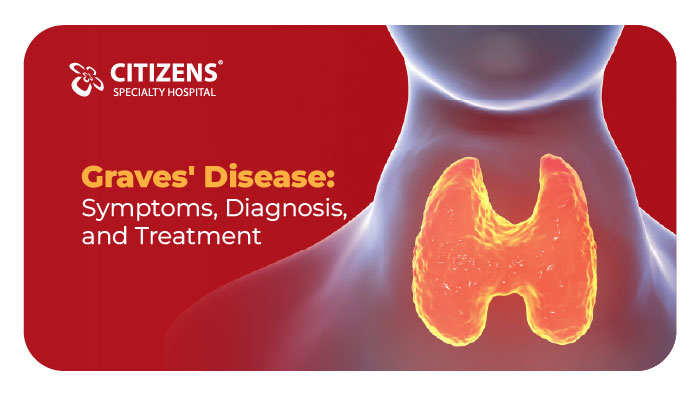
Graves’ Disease: Symptoms, Diagnosis, and Treatment
Graves’ disease is the most common cause of hyperthyroidism, a condition in
which the thyroid gland produces excessive amounts of thyroid hormone. This
autoimmune disorder can significantly impact nearly every system in the body,
but with proper diagnosis and treatment, most people achieve excellent symptom
control.
What Is Graves’ Disease?
Graves’ disease is an autoimmune condition in which the immune system produces
antibodies that stimulate the thyroid gland to overproduce thyroid hormone.
This excess hormone speeds up the body’s metabolic processes, leading to a
wide range of symptoms affecting multiple organ systems.
Who Is at Risk for Graves’ Disease?
- Gender – Significantly more common in women than men
-
Age – Most commonly diagnosed between ages 20 and 40,
though it can occur at any age
-
Family history – Genetic predisposition plays a notable
role
-
Other autoimmune conditions – Having one autoimmune disease
increases risk of others, including Graves’ disease
-
Stress – May act as a trigger in genetically susceptible
individuals
-
Smoking – Associated with increased risk and can worsen
eye-related complications
Recognizing the Symptoms of Graves’ Disease
General Symptoms of Hyperthyroidism
- Rapid or irregular heartbeat (palpitations)
- Unintentional weight loss despite normal or increased appetite
- Nervousness, anxiety, or irritability
- Tremors, particularly in the hands
- Heat intolerance and increased sweating
- Fatigue combined with muscle weakness
- Difficulty sleeping
- Frequent bowel movements
- Menstrual irregularities in women
Graves’ Ophthalmopathy (Eye Disease)
A distinctive feature of Graves’ disease affecting some patients:
- Bulging eyes (exophthalmos)
- Eye redness and irritation
- Double vision
- Sensitivity to light
- Puffy or retracted eyelids
- Pressure or pain behind the eyes
Graves’ Dermopathy
Less common, this involves thickening and reddening of the skin, typically on
the shins, due to the same autoimmune process affecting other tissues.
Goiter
Many people with Graves’ disease develop an enlarged thyroid gland, visible as
swelling in the front of the neck.
How Is Graves’ Disease Diagnosed?
-
Physical examination – Checking for enlarged thyroid, rapid
heart rate, tremors, and eye changes
-
Thyroid function blood tests – Measuring TSH, T3, and T4
levels to confirm hyperthyroidism
-
Thyroid antibody tests – Detecting specific antibodies
associated with Graves’ disease (TSI or TRAb)
-
Radioactive iodine uptake test – Measures how much iodine
the thyroid absorbs, helping distinguish Graves’ disease from other causes
of hyperthyroidism
-
Thyroid ultrasound – Evaluates thyroid size and structure,
and can assess blood flow patterns characteristic of Graves’ disease
Treatment Options for Graves’ Disease
Antithyroid Medications
These medications work by reducing the thyroid’s ability to produce hormones:
-
Often used as a first-line treatment, particularly for milder cases or as a
bridge to other treatments
-
Requires regular monitoring of thyroid function and, occasionally, blood
cell counts
-
Some patients achiseve long-term remission with medication alone, while
others require additional treatment
Radioactive Iodine Therapy
A common definitive treatment involving:
-
Oral administration of radioactive iodine, which selectively destroys
overactive thyroid tissue
-
Often results in hypothyroidism (underactive thyroid) over time, requiring
lifelong thyroid hormone replacement
-
Not used in pregnant women or those planning pregnancy in the near future
Surgery (Thyroidectomy)
Surgical removal of part or all the thyroid glands may be recommended for:
- Very large goiters cause compressive symptoms
- Suspicion of coexisting thyroid nodules or cancer
-
Patients who prefer definitive treatment or cannot tolerate other options
-
Those with significant Graves’ ophthalmopathy, in some treatment approaches
Following thyroidectomy, lifelong thyroid hormone replacement is typically
necessary.
Managing Symptoms During Treatment
-
Beta-blockers – Help control symptoms like rapid heart
rate, tremors, and anxiety while definitive treatment takes effect
-
Eye care measures – Artificial tears, sunglasses, and other
supportive measures for mild eye symptoms; more significant eye disease may
require specialized treatment
Treating Graves’ Ophthalmopathy
Eye involvement may require specific treatment beyond thyroid management:
-
Mild cases – Lubricating eye drops, sunglasses, and
elevating the head during sleep
-
Moderate to severe cases – Corticosteroids or other
immune-modulating treatments to reduce inflammation
-
Surgical options – In severe cases, procedures to address
eye muscle or eyelid involvement, or to relieve pressure behind the eyes
Smoking cessation is particularly important for those with Graves’
ophthalmopathy, as smoking significantly worsens eye-related complications.
Living with Graves’ Disease
-
Attend regular follow-up appointments to monitor thyroid function and adjust
treatment as needed
- Take medications as prescribed, even if symptoms improve
- Report new or worsening eye symptoms promptly to your care team
-
Manage stress through relaxation techniques, as stress can potentially
trigger flares
- Maintain a balanced diet and moderate exercise as tolerated
- Avoid smoking, particularly important for those with eye involvement
Potential Complications if Left Untreated
-
Thyroid storm – A rare but life-threatening surge of thyroid hormone
requiring emergency treatment
- Heart problems, including irregular heart rhythms and heart failure
-
Osteoporosis, due to prolonged excess thyroid hormone affecting bone density
- Significant vision problems from untreated severe eye disease
- Pregnancy complications if untreated during pregnancy
Graves’ Disease and Pregnancy
Women with Graves’ disease who are pregnant or planning pregnancy require
careful management:
-
Certain antithyroid medications are preferred during different trimesters
based on safety profiles
-
Close monitoring of thyroid function throughout pregnancy is essential
-
Radioactive iodine therapy is contraindicated during pregnancy and
breastfeeding
-
Coordination between endocrinologist and obstetrician ensures optimal care
for both mother and baby
Conclusion
Graves’ disease is a manageable autoimmune condition when diagnosed and
treated appropriately. With several effective treatment options available from
medication to radioactive iodine to surgery most people achieve good control
of their symptoms and go on to lead normal, healthy lives. Regular monitoring
and open communication with your endocrinologist are key to successful
long-term management.
Frequently Asked Questions
Q: Can Graves’ disease be cured? A: While there’s no
guaranteed permanent cure, treatments like radioactive iodine or surgery can
definitively resolve the overactive thyroid, though this often results in
needing lifelong thyroid hormone replacement.
Q: Will I need to take medication for the rest of my life?
A: This depends on your treatment approach. Some patients achieve remission
with antithyroid medication alone, while those undergoing radioactive iodine
or surgery will typically need lifelong thyroid hormone replacement.
Q: Can Graves’ disease affect my eyes even if my thyroid levels are
normal?
A: Yes, Graves’ ophthalmopathy can occur independently of current thyroid
hormone levels and may require separate monitoring and treatment.
Q: Is Graves’ disease hereditary? A: There is a genetic
component, as having a family member with Graves’ disease or other autoimmune
thyroid conditions increases your risk, though it’s not directly inherited in
a simple pattern.
Q: How quickly do symptoms improve with treatment? A:
Beta-blockers can improve symptoms like rapid heart rate within days, while
antithyroid medications typically take several weeks to normalize thyroid
hormone levels.