Kidneys play a vital role in maintaining overall health by filtering waste products, excess fluids, and toxins from the blood. They also help regulate blood pressure, maintain electrolyte balance, and support red blood cell production. When the kidneys lose their ability to function properly due to chronic kidney disease (CKD) or kidney failure, harmful substances accumulate in the body, leading to serious health complications. In such situations, dialysis becomes a life-saving treatment.
For many patients and families, the idea of starting dialysis can feel overwhelming. Understanding the different types of dialysis, how the treatment works, and what to expect during the process can help reduce anxiety and enable patients to make informed decisions about their care.
What Is Dialysis?
Dialysis is a medical treatment that performs some of the functions of healthy kidneys when they can no longer work adequately. It helps remove waste products, excess salt, and extra fluid from the blood, thereby maintaining the body's internal balance.
Dialysis does not cure kidney disease, but it helps patients manage kidney failure and maintain a better quality of life.
Dialysis is usually recommended when a person develops end-stage kidney disease (ESKD) or end-stage renal disease (ESRD), where kidney function falls below approximately 10–15% of normal capacity.
Why Is Dialysis Needed?
Healthy kidneys perform several essential functions, including:
When kidney function declines significantly, waste products and excess fluid build up in the bloodstream, causing symptoms such as:
Without treatment, severe kidney failure can become life-threatening.
Conditions That May Lead to Dialysis
Several medical conditions can cause kidney failure and eventually require dialysis.
1. Chronic Kidney Disease (CKD)
CKD is the most common reason for dialysis. It is a gradual loss of kidney function over months or years.
2. Diabetes
Diabetes is one of the leading causes of kidney failure worldwide. High blood sugar levels damage the small blood vessels in the kidneys over time.
3. High Blood Pressure
Uncontrolled hypertension can damage kidney tissues and reduce kidney function.
4. Glomerulonephritis
Inflammation of the kidney's filtering units can lead to progressive kidney damage.
5. Polycystic Kidney Disease
This inherited disorder causes numerous cysts to develop in the kidneys, eventually impairing their function.
6. Acute Kidney Injury (AKI)
Sudden kidney failure caused by severe infections, dehydration, surgery, or medication toxicity may require temporary dialysis.
When Do Doctors Recommend Dialysis?
Doctors do not rely solely on laboratory values when deciding to start dialysis. They consider several factors, including:
Common indications for dialysis include:
Main Types of Dialysis
There are two primary forms of dialysis:
Both methods effectively remove waste products and excess fluid, but they differ in technique, frequency, and lifestyle considerations.
1. Hemodialysis
Hemodialysis is the most used form of dialysis.
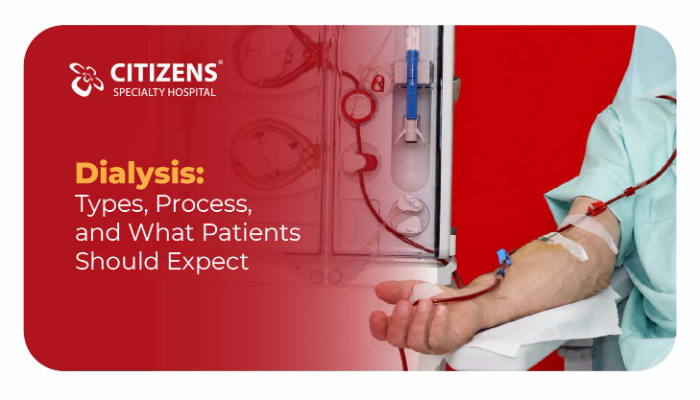
In this procedure, blood is removed from the body and passed through a specialized filter called a dialyzer or "artificial kidney." The cleaned blood is then returned to the body.
How Does Hemodialysis Work?
The process involves:
Vascular Access for Hemodialysis
A reliable access point is required to remove and return blood.
Arteriovenous (AV) Fistula
An AV fistula is created surgically by connecting an artery and vein, usually in the arm.
Advantages:
Arteriovenous (AV) Graft
If veins are unsuitable for a fistula, a synthetic tube may be inserted to connect an artery and vein.
Central Venous Catheter
A catheter may be placed in a large vein in the neck, chest, or groin for temporary dialysis.
Frequency of Hemodialysis
Most patients undergo:
However, treatment schedules vary according to individual needs.
Where Is Hemodialysis Performed?
Hemodialysis may be performed:
Benefits of Hemodialysis
Potential Challenges
2. Peritoneal Dialysis
Peritoneal dialysis uses the body's own abdominal lining (peritoneum) as a natural filter.
A catheter is surgically placed into the abdomen, and a special cleansing fluid called dialysate is introduced into the abdominal cavity.
Waste products and excess fluid move from blood vessels into the dialysate, which is later drained and replaced.
Types of Peritoneal Dialysis
Continuous Ambulatory Peritoneal Dialysis (CAPD)
CAPD is performed manually.
The patient:
Typically, patients perform 3–5 exchanges daily.
Automated Peritoneal Dialysis (APD)
APD uses a machine called a cycler.
The machine automatically performs fluid exchanges, usually during sleep.
Advantages of Peritoneal Dialysis
Limitations
The Dialysis Process: Step by Step
Before Starting Dialysis
Patients undergo comprehensive evaluation, including:
The healthcare team discusses:
During Hemodialysis
Arrival and Preparation
Patients are weighed before treatment to determine fluid removal goals.
Healthcare staff check:
Starting Treatment
Needles are inserted into the vascular access site.
Blood circulates through the dialysis machine and is continuously monitored.
During the Session
Patients may:
Medical staff regularly monitor vital signs.
Completion
At the end of treatment:
During Peritoneal Dialysis
The process generally includes:
Fill
Dialysate flows into the abdomen.
Dwell
The solution remains inside the abdominal cavity for several hours.
Drain
The used solution containing waste products is drained out.
What Patients Should Expect After Starting Dialysis
Starting dialysis involves physical and emotional adjustments.
Physical Changes
Patients may experience:
Improved Symptoms
Many individuals notice:
Fatigue
Feeling tired, particularly after hemodialysis sessions, is common.
Blood Pressure Changes
Some patients experience low blood pressure during or after treatment.
Muscle Cramps
Rapid fluid removal can occasionally lead to cramps.
Emotional Adjustments
A diagnosis of kidney failure and the need for dialysis can trigger:
Possible Risks and Complications
Although dialysis is generally safe, complications can occur.
Hemodialysis Complications
Peritoneal Dialysis Complications
Peritonitis
Infection of the abdominal lining is the most serious complication.
Symptoms include:
Immediate medical attention is necessary.
Catheter Infection
Redness, swelling, or discharge around the catheter site may indicate infection.
Diet and Lifestyle During Dialysis
Nutrition plays a crucial role in dialysis success.
Dietary Recommendations
Patients may need to:
Limit Sodium
Reducing salt intake helps control blood pressure and fluid retention.
Restrict Potassium
Excess potassium can affect heart rhythm.
Foods high in potassium include:
Control Phosphorus Intake
High phosphorus levels may weaken bones.
Foods high in phosphorus include:
Manage Fluid Intake
Excess fluid can cause:
A renal dietitian can provide individualized dietary guidance.
Staying Active
Regular physical activity can:
Activities such as walking, stretching, and light exercises are generally encouraged after medical consultation.
Living Well on Dialysis
Many people continue to lead fulfilling and productive lives while receiving dialysis. Patients often continue working, traveling, spending time with family, and participating in hobbies.
Successful dialysis management involves:
Patients should also discuss whether kidney transplantation may be a suitable long-term treatment option.
Conclusion
Dialysis is a vital treatment for individuals with severe kidney failure, helping remove waste products and excess fluid when the kidneys can no longer function effectively. Understanding the different types of dialysis, the treatment process, and what to expect can help patients and caregivers prepare for this important journey.
With appropriate medical care, lifestyle modifications, emotional support, and active participation in treatment, many patients on dialysis can maintain a good quality of life and continue engaging in daily activities with confidence.