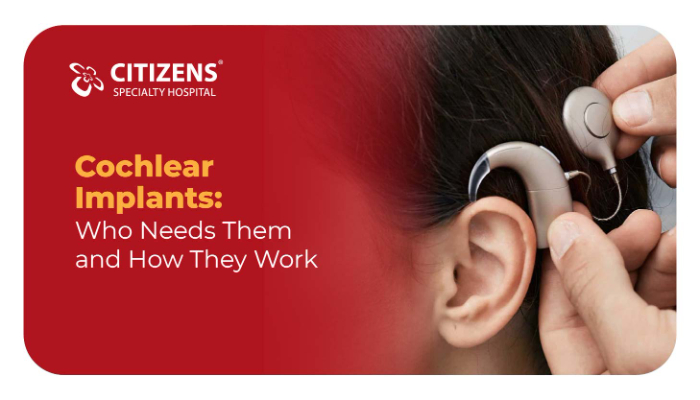
Hearing plays a vital role in communication, learning, social interaction, and overall quality of life. For individuals with severe hearing loss, everyday conversations, education, and professional activities can become challenging. While hearing aids help many people with hearing impairment, they may not be sufficient for those with profound hearing loss. In such cases, cochlear implants can offer a life-changing solution.
A cochlear implant is an advanced medical device designed to restore the perception of sound in people with severe to profound hearing loss. Unlike hearing aids, which amplify sound, cochlear implants bypass damaged parts of the inner ear and directly stimulate the auditory nerve.
What Is a Cochlear Implant?
A cochlear implant is an electronic medical device that helps individuals with severe hearing loss hear sounds by directly stimulating the auditory nerve.
The device consists of two main components:
1. External Component
This portion is worn outside the ear and includes:
2. Internal Component
Surgically implanted beneath the skin, this part includes:
Understanding How Normal Hearing Works
To understand cochlear implants, it is important to know how hearing normally occurs.
When the hair cells in the cochlea become damaged due to aging, infection, genetic disorders, or noise exposure, hearing loss occurs.
A cochlear implant bypasses these damaged hair cells and directly stimulates the auditory nerve.
How Does a Cochlear Implant Work?
The cochlear implant system works in several steps:
Step 1: Sound Collection
The microphone captures sounds from the surrounding environment.
Step 2: Sound Processing
The speech processor analyzes and converts sound into digital signals.
Step 3: Signal Transmission
The transmitter sends coded signals through the skin to the implanted receiver.
Step 4: Electrical Stimulation
The internal receiver converts the signals into electrical impulses.
Step 5: Auditory Nerve Activation
The electrode array stimulates the auditory nerve fibers directly.
Step 6: Brain Interpretation
The brain interprets these electrical signals as meaningful sounds, speech, music, or environmental noises.
Although the hearing experience differs from natural hearing initially, most recipients learn to interpret sounds effectively over time through rehabilitation and practice.
Who Needs a Cochlear Implant?
Cochlear implants are recommended for people with severe to profound sensorineural hearing loss who receive limited benefit from hearing aids.
Candidates include both children and adults.
Adults May Be Candidates If They Have:
Examples include individuals who:
Cochlear Implants in Children
Children with severe hearing loss benefit greatly from early identification and treatment.
A child may require a cochlear implant if they:
Early implantation often before 12 months of age in appropriate candidates can significantly improve language development and educational outcomes.
Children implanted early frequently develop speech and communication skills similar to their hearing peers.
Conditions That Can Lead to Severe Hearing Loss
Several conditions may damage the cochlea and lead to profound hearing loss.
Congenital Causes
Acquired Causes
Who Is Not a Suitable Candidate?
Not everyone with hearing loss is eligible for cochlear implantation.
A person may not be a candidate if they have:
A comprehensive evaluation helps determine eligibility.
Evaluation Before Cochlear Implant Surgery
Before recommending implantation, specialists perform several assessments.
Audiological Evaluation
An audiologist measures:
Medical Examination
An ear, nose, and throat (ENT) surgeon evaluates overall ear health and medical fitness.
Imaging Studies
Imaging tests include:
These scans assess cochlear anatomy and auditory nerve integrity.
Speech and Language Assessment
Particularly important in children, this evaluation determines communication abilities and rehabilitation needs.
Psychological and Counseling Assessment
Patients and families receive counseling regarding:
Types of Cochlear Implants
Bilateral Cochlear Implants
Devices are implanted in both ears.
Benefits include:
Unilateral Cochlear Implant
Implantation is performed in one ear only.
This option may be suitable for some patients based on hearing levels and medical considerations.
Hybrid Cochlear Implant
Designed for individuals who retain low-frequency hearing but have severe high- frequency hearing loss.
The device combines acoustic amplification and electrical stimulation.
The Cochlear Implant Surgery Procedure
Cochlear implant surgery is usually performed under general anesthesia.
Step-by-Step Procedure
1. Anesthesia
The patient is placed under general anesthesia.
2. Surgical Incision
A small incision is made behind the ear.
3. Access to the Cochlea
The surgeon creates an opening in the mastoid bone and accesses the inner ear.
4. Electrode Placement
The electrode array is carefully inserted into the cochlea.
5. Receiver Placement
The receiver-stimulator is secured beneath the skin.
6. Closure
The incision is closed with sutures.
The procedure generally takes 2–4 hours.
Most patients return home the same day or after one overnight hospital stay.
What Happens After Surgery?
Immediately after surgery, the implant remains inactive for approximately 2–4 weeks to allow healing.
Once healing is complete:
Device Activation
The external speech processor is connected and programmed.
This initial activation is often an emotional milestone for recipients.
However, sounds may initially appear unusual, robotic, or unfamiliar.
Cochlear Implant Mapping
Programming the implant, known as "mapping," is crucial for optimal performance.
Audiologists adjust:
Multiple sessions are required, especially during the first year.
Rehabilitation After Cochlear Implantation
Successful outcomes depend heavily on rehabilitation.
Patients undergo:
Auditory Training
Learning to recognize and interpret sounds.
Speech Therapy
Especially important for children and adults who have experienced prolonged deafness.
Listening Exercises
These exercises improve:
Rehabilitation may continue for months or years.
Benefits of Cochlear Implants
Many recipients experience substantial improvements in hearing and quality of life.
Potential Benefits Include:
Improved Speech Understanding
Most recipients understand conversations much better than before surgery.
Better Communication
Enhanced participation in family, educational, and workplace settings.
Improved Language Development in Children
Early implantation supports speech and language acquisition.
Greater Independence
Patients can communicate more confidently and participate in social activities.
Enhanced Safety
Ability to hear alarms, traffic, and warning signals.
Reduced Social Isolation
Improved hearing often leads to stronger social relationships and emotional well-being.
Risks and Complications
Cochlear implant surgery is generally safe, but as with any surgical procedure, complications can occur.
Possible risks include:
How Successful Are Cochlear Implants?
Outcomes vary depending on several factors:
Individuals who receive implants soon after hearing loss often achieve better outcomes than those who remain deaf for many years.
Many adults can:
Children implanted early frequently attend mainstream schools and develop age-appropriate communication skills.
Living With a Cochlear Implant
Most recipients adapt well and lead active lifestyles.
However, patients should remember:
Healthcare providers will offer detailed instructions regarding device care and lifestyle considerations.
When Should You Consult a Specialist?
Consult an ENT specialist or audiologist if you or your child:
Early evaluation can significantly improve long-term outcomes.
Conclusion
Cochlear implants have transformed the lives of countless individuals with severe to profound hearing loss. By bypassing damaged structures within the inner ear and directly stimulating the auditory nerve, these devices provide access to sound when conventional hearing aids are insufficient.
Appropriate patient selection, timely intervention, expert surgical care, and dedicated rehabilitation are essential for achieving the best outcomes. For many children and adults, cochlear implantation opens the door to improved communication, greater independence, and a significantly enhanced quality of life.