A brain aneurysm is a potentially life-threatening condition that affects thousands of people worldwide. Advances in neurosurgery and minimally invasive techniques have significantly improved outcomes for patients diagnosed with this condition. Among the most common treatment options are surgical clipping and endovascular coiling. Understanding the differences between these procedures can help patients and their families make informed decisions about treatment.
What Is a Brain Aneurysm?
A brain aneurysm, also known as a cerebral aneurysm, is a weakened area in the wall of a blood vessel in the brain that balloons or bulges outward. The bulge may remain stable for years without causing symptoms. However, if it ruptures, it can lead to bleeding in the brain, known as a subarachnoid hemorrhage, which is a medical emergency.
Brain aneurysms can vary in size:
Most aneurysms occur at branching points of arteries because these areas experience greater blood flow pressure.
Types of Brain Aneurysms
1. Saccular Aneurysm
Also called a "berry aneurysm," this is the most common type. It appears as a small sac attached to an artery.
2. Fusiform Aneurysm
This type causes the entire blood vessel wall to bulge on all sides.
3. Dissecting Aneurysm
Occurs when a tear develops in the inner layer of an artery, causing blood to separate the layers of the vessel wall.
Causes and Risk Factors
The exact cause of brain aneurysms is not always known, but several factors can increase the risk.
Non-Modifiable Risk Factors
Modifiable Risk Factors
Managing these risk factors can help reduce the likelihood of aneurysm growth or rupture.
Symptoms of a Brain Aneurysm
Symptoms of an Unruptured Aneurysm
Many unruptured aneurysms cause no symptoms and are discovered incidentally during imaging studies. Larger aneurysms may press on surrounding structures and cause:
Symptoms of a Ruptured Aneurysm
A ruptured aneurysm requires immediate emergency care. Symptoms include:
How Is a Brain Aneurysm Diagnosed?
Doctors use several imaging techniques to diagnose and evaluate aneurysms.
Computed Tomography (CT) Scan
A CT scan quickly identifies bleeding in the brain after aneurysm rupture.
CT Angiography (CTA)
CTA provides detailed images of blood vessels and helps locate aneurysms.
Magnetic Resonance Imaging (MRI)
MRI offers detailed images of brain tissues and blood vessels.
Magnetic Resonance Angiography (MRA)
MRA specifically visualizes blood vessels and can detect unruptured aneurysms.
Cerebral Angiography
Considered the gold standard for diagnosis, cerebral angiography involves injecting contrast dye into blood vessels to obtain highly detailed images.
When Is Treatment Necessary?
Not all aneurysms require immediate intervention. Treatment decisions depend on factors such as:
Large, irregular, symptomatic, or ruptured aneurysms generally require treatment.
Treatment Options: Clipping vs Coiling
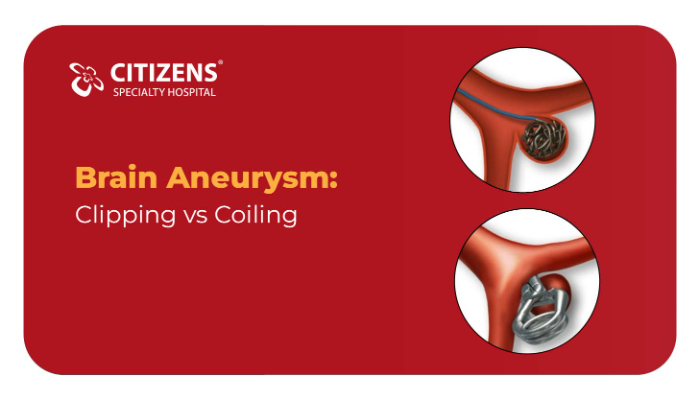
The two primary treatments for brain aneurysms are microsurgical clipping and endovascular coiling.
What Is Surgical Clipping?
Surgical clipping is a traditional open neurosurgical procedure designed to permanently isolate the aneurysm from normal blood circulation.
How Is Clipping Performed?
Advantages of Clipping
Long-Term Durability
Clipping offers excellent long-term protection, with very low recurrence rates.
Complete Aneurysm Closure
The aneurysm is permanently excluded from circulation in most cases.
Lower Need for Follow-Up Procedures
Patients typically require fewer repeat interventions compared to coiling.
Effective for Complex Aneurysms
Clipping may be preferable for:
Limitations of Clipping
What Is Endovascular Coiling?
Endovascular coiling is a minimally invasive technique performed by neurointerventional specialists.
How Is Coiling Performed?
No opening in the skull is required.
Advantages of Coiling
Minimally Invasive
The procedure avoids craniotomy and extensive surgical exposure.
Faster Recovery
Most patients recover more quickly than after open surgery.
Shorter Hospital Stay
Hospitalization is often significantly shorter.
Suitable for High-Risk Patients
Coiling may be preferred in:
Limitations of Coiling
Clipping vs Coiling: Key Differences
| Feature | Surgical Clipping | Endovascular Coiling |
|---|---|---|
| Procedure Type | Open surgery | Minimally invasive |
| Skull Opening | Required | Not required |
| Hospital Stay | Longer | Shorter |
| Recovery Time | Several weeks | Days to weeks |
| Durability | Excellent | Good but may require retreatment |
| Recurrence Risk | Very low | Higher |
| Follow-Up Imaging | Less frequent | More frequent |
| Suitable for Complex Anatomy | Often preferred | May be challenging |
| Invasiveness | Higher | Lower |
Which Procedure Is Better?
There is no universal answer. The best treatment depends on individual patient factors.
Clipping May Be Preferred When:
Coiling May Be Preferred When:
A multidisciplinary team including neurosurgeons, neurointerventional radiologists, and neurologists typically determines the optimal treatment strategy.
Recovery After Brain Aneurysm Treatment
Recovery Following Clipping
Patients may experience:
Recovery often takes several weeks to months.
Recovery Following Coiling
Recovery is generally faster. Most patients resume routine activities within a few days to weeks, depending on the complexity of the procedure and whether rupture occurred.
Potential Complications
Although both procedures are generally safe, complications may occur.
Complications of Clipping
Complications of Coiling
Prompt recognition and expert management significantly reduce risks.
Life After Aneurysm Treatment
Many patients return to normal lives following successful treatment. Long-term management focuses on reducing future vascular risks.
Recommended lifestyle measures include:
Regular imaging studies may be recommended, especially after coiling, to ensure the aneurysm remains securely sealed.
Preventing Brain Aneurysm Rupture
While not all aneurysms can be prevented, the following measures may lower risk:
Conclusion
Brain aneurysms are serious conditions that require timely diagnosis and expert treatment. Both surgical clipping and endovascular coiling are highly effective methods for preventing aneurysm rupture or rebleeding. Clipping offers long-lasting durability, while coiling provides a minimally invasive alternative with faster recovery.
The choice between clipping and coiling depends on aneurysm characteristics, patient health, age, and overall risk profile. Consultation with an experienced neurovascular team is essential to determine the most appropriate treatment and achieve the best possible outcomes.