A bone marrow transplant (BMT), also known as a stem cell transplant, is a life-saving treatment for many blood-related diseases and certain cancers. For patients diagnosed with conditions such as leukemia, lymphoma, multiple myeloma, aplastic anemia, or inherited blood disorders, a bone marrow transplant can offer the possibility of long- term remission or even a cure.
Despite its potential benefits, the idea of undergoing a bone marrow transplant can feel overwhelming. Patients and their families often have many questions: What exactly is a bone marrow transplant? What are the different types? How long does recovery take? What side effects should patients expect?
What Is a Bone Marrow Transplant?
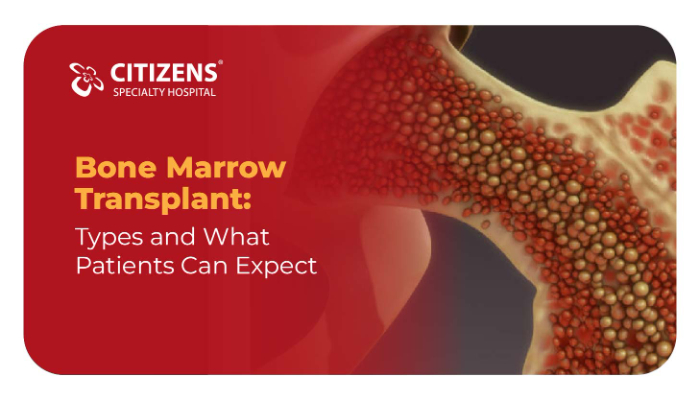
Bone marrow is the soft, spongy tissue found inside bones. It contains hematopoietic stem cells, which are immature cells responsible for producing:
When bone marrow becomes damaged or diseased, it may no longer produce healthy blood cells. A bone marrow transplant replaces damaged or destroyed bone marrow with healthy stem cells, allowing the body to regenerate normal blood cells.
Today, many transplants involve collecting stem cells from the bloodstream rather than directly from bone marrow, which is why the procedure is also commonly called a hematopoietic stem cell transplant (HSCT).
Conditions Treated with Bone Marrow Transplant
Doctors may recommend a bone marrow transplant for several malignant and non- malignant conditions.
Blood Cancers
Bone Marrow Failure Disorders
Genetic and Inherited Disorders
Certain Autoimmune Diseases
In select cases, transplants may be considered for severe autoimmune disorders that have not responded to standard treatments.
Types of Bone Marrow Transplants
The type of transplant depends on the patient's disease, overall health, age, and donor availability.
1. Autologous Bone Marrow Transplant
An autologous transplant uses the patient's own stem cells.
How It Works
Common Uses
Advantages
Limitations
2. Allogeneic Bone Marrow Transplant
An allogeneic transplant uses stem cells from another person whose tissue type closely matches the patient.
Donors may include:
The donor's tissue compatibility is determined using human leukocyte antigen (HLA) matching.
Common Uses
Advantages
Limitations
3. Syngeneic Bone Marrow Transplant
A syngeneic transplant occurs when stem cells come from an identical twin.
Since identical twins share the same genetic makeup, complications such as rejection are rare.
However, this type of transplant is uncommon because few patients have an identical twin donor.
4. Haploidentical Transplant
A haploidentical transplant uses a donor who is only a partial tissue match, usually:
Advances in transplant medicine have made haploidentical transplantation increasingly successful, significantly expanding donor options for patients who lack a fully matched donor.
5. Umbilical Cord Blood Transplant
Stem cells collected from donated umbilical cord blood after childbirth may also be used.
Benefits
Challenges
Sources of Stem Cells
Stem cells used in transplantation can be obtained from three primary sources.
Peripheral Blood Stem Cells (PBSC)
Most transplants today use stem cells collected from circulating blood through a process called apheresis.
Advantages include:
Bone Marrow Harvest
Stem cells are collected directly from the donor's pelvic bone under anesthesia.
Umbilical Cord Blood
Stem cells are collected from the placenta and umbilical cord immediately after birth and stored in specialized banks.
The Bone Marrow Transplant Process
Bone marrow transplantation involves several important stages.
Step 1: Pre-Transplant Evaluation
Before transplantation, patients undergo comprehensive testing to determine whether they are suitable candidates.
Tests may include:
Healthcare providers also assess psychological and social support systems.
Step 2: Finding a Donor
For allogeneic transplants, donor identification is critical.
Potential donors undergo HLA testing to determine compatibility.
If a family match is unavailable, physicians search international donor registries for unrelated donors.
Step 3: Conditioning Therapy
Prior to receiving stem cells, patients receive conditioning treatment consisting of:
The goals are to:
Conditioning intensity varies and may be:
Myeloablative Conditioning
Very high-dose treatment completely destroys existing bone marrow.
Reduced-Intensity Conditioning
Lower-dose therapy used in older adults or medically fragile patients.
Step 4: Stem Cell Infusion
The transplant itself is relatively straightforward.
Stem cells are infused through an intravenous catheter, similar to receiving a blood transfusion.
The procedure is generally painless and usually takes several hours.
Patients remain awake throughout the infusion.
Step 5: Engraftment
After infusion, stem cells travel through the bloodstream to the bone marrow and begin producing new blood cells.
This process is called engraftment.
Engraftment usually occurs:
During this period, patients are highly vulnerable to infection and bleeding.
What Patients Can Expect During Hospitalization
Hospital stays vary depending on transplant type and individual recovery.
Patients often remain hospitalized for several weeks.
Common experiences include:
Fatigue
Extreme tiredness is common due to chemotherapy, anemia, and the body's recovery process.
Nausea and Vomiting
Conditioning treatments frequently cause gastrointestinal side effects, although medications help control symptoms.
Mouth Sores
Painful ulcers in the mouth and throat can make eating difficult.
Hair Loss
Many conditioning regimens result in temporary hair loss.
Loss of Appetite
Changes in taste and reduced appetite are common.
Low Blood Counts
Patients may require:
Potential Complications
Although bone marrow transplantation can be curative, complications may occur.
Infections
The immune system remains weakened for months after transplantation, increasing susceptibility to:
Preventive medications are routinely prescribed.
Graft-Versus-Host Disease (GVHD)
GVHD occurs when donor immune cells attack the recipient's tissues.
Commonly affected organs include:
Symptoms may include:
GVHD may be acute or chronic.
Graft Failure
Rarely, transplanted stem cells fail to grow and produce blood cells.
Additional treatment or repeat transplantation may be necessary.
Organ Damage
Chemotherapy and radiation can affect:
Infertility
Some conditioning regimens can permanently affect fertility. Fertility preservation options should be discussed before treatment begins.
Recovery After Bone Marrow Transplant
Recovery continues long after hospital discharge.
Most patients require several months to a year for substantial recovery.
Follow-Up Care Includes
Lifestyle Recommendations
Patients are usually advised to:
Emotional and Psychological Impact
The transplant journey can be emotionally challenging.
Patients may experience:
Support from healthcare teams, counselors, family members, and support groups plays an essential role in recovery.
Many transplant centers offer comprehensive psychosocial services to help patients and caregivers cope with treatment-related stress.
Long-Term Outlook
Outcomes after bone marrow transplantation vary based on:
Advances in transplant techniques, supportive care, donor availability, and infection prevention have significantly improved survival rates over the past few decades.
For many individuals with otherwise life-threatening diseases, bone marrow transplantation offers the possibility of long-term disease control, remission, and improved quality of life.
Conclusion
A bone marrow transplant is a complex but potentially life-saving procedure used to treat various blood cancers, bone marrow disorders, and inherited diseases. Understanding the different transplant types—autologous, allogeneic, syngeneic, haploidentical, and cord blood transplantation—can help patients and families make informed decisions.
While the transplant journey involves intensive treatment and a prolonged recovery period, ongoing advances in medical care continue to improve outcomes and offer hope to thousands of patients worldwide. Early consultation with a transplant specialist can help determine whether a bone marrow transplant is the right treatment option and what to expect throughout the process.