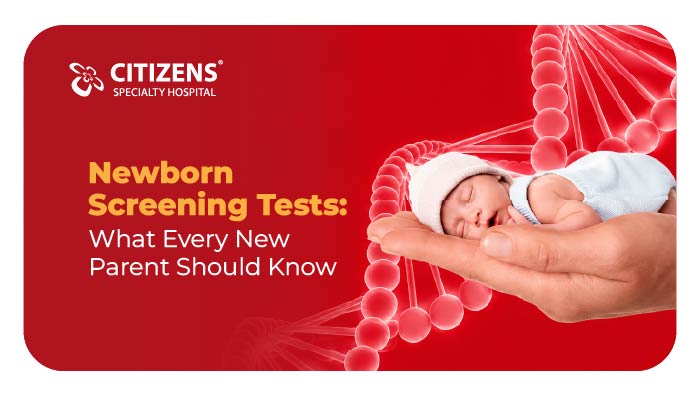
Welcoming a newborn is one of life's most joyful moments. Amid the excitement, sleepless nights and endless photos, new parents are also introduced to a series of tests for their baby. One of the most important of these is newborn screening.
What Is Newborn Screening?
Newborn screening is a set of simple tests performed shortly after birth to identify babies who may have certain genetic, hormonal, metabolic, hearing or heart conditions. It is not meant to diagnose disease on its own. Instead, it flags babies who need further testing.
Newborn screening usually includes three parts:
Many hospitals also perform a detailed physical examination, including checks of the eyes, hips and heart.
1. The Heel Prick Blood Test
How It Is Done
A few drops of blood are collected from the baby's heel using a tiny prick and placed on a special filter paper card. The card is sent to a laboratory for testing.
When Is It Done?
The test is ideally done after 24 hours and before 72 hours of life, once the baby has started feeding. Testing too early can sometimes give inaccurate results for certain conditions. If the baby is discharged early or born prematurely, the test may need to be repeated.
Does It Hurt?
The baby may feel a brief sting and might cry for a moment. Holding your baby skin-to-skin, breastfeeding during the test or swaddling can help keep them calm.
Common Conditions Screened
The exact list varies between hospitals and regions. Expanded newborn screening panels can test for more than 40 conditions. Some of the most important include:
2. Newborn Hearing Screening
About 1 to 3 in every 1,000 newborns are born with significant hearing loss, and the rate is higher in babies who needed intensive care. Since hearing is essential for speech and language development, early detection makes a lifelong difference.
How It Is Done
Hearing tests are quick, painless and are usually done while the baby is asleep:
Understanding the Results
A "refer" result does not necessarily mean your baby has hearing loss. Fluid or debris in the ear after birth is a common reason. The test will be repeated, and if the result is still unclear, a detailed hearing assessment will be arranged.
The goal is often summed up as 1-3-6: screening by 1 month, diagnosis by 3 months and intervention by 6 months of age.
3. Pulse Oximetry for Critical Congenital Heart Disease (CCHD)
Some serious heart defects may not be obvious at birth. Pulse oximetry is a simple, painless test that measures the oxygen level in the baby's blood using a small sensor on the right hand and one foot.
Other Important Newborn Checks
What Happens If a Screening Result Is Abnormal?
Try not to panic. An abnormal or "positive" screening result means your baby needs further testing, not that they definitely have a condition. Many babies with an abnormal screening result turn out to be healthy.
If a result is abnormal:
Why Early Detection Makes Such a Big Difference
Many conditions picked up through newborn screening are highly treatable when found early:
Without screening, these conditions may only become apparent after irreversible damage has occurred.
Tips for New Parents
Special Considerations for Premature and Sick Babies
Babies born early, those with low birth weight and those who need care in the neonatal intensive care unit (NICU) may need a slightly different screening schedule. Some results can be affected by prematurity, blood transfusions, feeding through a drip or certain medicines, so a repeat blood spot test is often recommended after a few weeks. NICU babies are also at higher risk of hearing loss and retinopathy of prematurity, and usually receive automated auditory brainstem response testing and scheduled eye examinations. Your neonatology team will explain which tests your baby needs and when.
Frequently Asked Questions
Is newborn screening necessary if my baby looks healthy?
Yes. Most babies with these conditions look completely normal at birth. Screening is the only way to find them early.
Can screening be done after leaving the hospital?
Yes, but it should be done as soon as possible. Speak to your paediatrician if your baby was discharged before screening.
Are the tests safe?
Yes. The heel prick causes only brief discomfort, and hearing and pulse oximetry tests are completely painless.