What Is a Pacemaker? Who Needs One and What Does Recovery Involve?
Hearing that you or a loved one needs a pacemaker can feel overwhelming. Many people imagine major heart surgery, long hospital stays and a lifetime of restrictions. The reality is very different. Pacemaker implantation is one of the most common and well-established heart procedures, usually done under local anaesthesia, with most patients going home within a day or two.
How Does the Heart's Electrical System Work?
Your heart has its own natural pacemaker, a small cluster of cells called the sinoatrial (SA) node, located in the upper right chamber (right atrium). It sends out regular electrical signals that travel through the heart, telling it when to contract.
These signals pass through a relay station called the atrioventricular (AV) node, then spread through the lower chambers (ventricles), which pump blood to the body. A normal resting heart rate is usually between 60 and 100 beats per minute.
When this electrical system is damaged or slows down, the heart may beat too slowly, pause or fail to coordinate properly. This is where an artificial pacemaker helps.
What Is a Pacemaker?
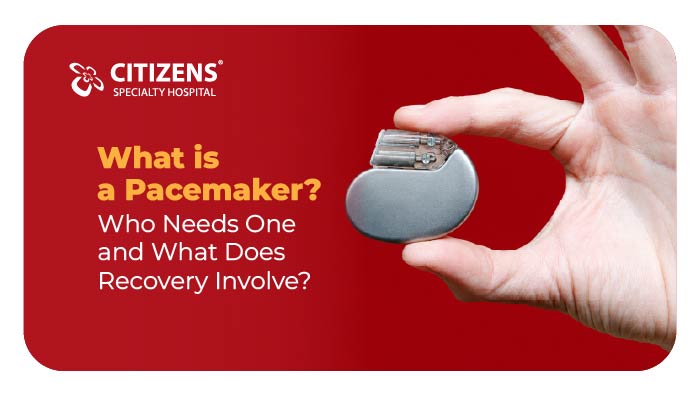
A pacemaker is a small, battery-powered device that monitors your heart rhythm and sends electrical impulses to make the heart beat at a normal rate when needed.
Parts of a Traditional Pacemaker
- Pulse generator: a small metal case, roughly the size of a matchbox, containing the battery and computer circuitry. It is placed under the skin, usually below the collarbone.
- Leads: thin, insulated wires that run through a vein into the heart chambers. They detect the heart's natural activity and deliver pacing impulses.
Modern pacemakers are "smart". They only pace when the heart needs help, and many can increase the heart rate during physical activity.
Types of Pacemakers
- Single-chamber pacemaker: one lead, usually in the right ventricle
- Dual-chamber pacemaker: two leads, in the right atrium and right ventricle, to keep the upper and lower chambers coordinated
- Biventricular pacemaker (cardiac resynchronisation therapy, CRT): three leads to help both sides of the heart beat together, used in certain patients with heart failure
- Leadless pacemaker: a tiny capsule-shaped device placed directly inside the heart through a vein in the leg, with no leads or chest pocket
- Conduction system pacing: a newer technique that stimulates the heart's natural wiring for a more physiological heartbeat
Some patients need an implantable cardioverter-defibrillator (ICD), which can also pace the heart but additionally delivers a shock to correct dangerous fast rhythms.
Who Needs a Pacemaker?
A pacemaker is recommended when the heart beats too slowly (bradycardia) or has electrical blocks that cause symptoms or put the person at risk.
Common Reasons
- Sick sinus syndrome: the SA node fires too slowly, pauses or alternates between slow and fast rhythms
- Heart block: electrical signals are delayed or blocked between the upper and lower chambers. Second-degree (type 2) and complete (third-degree) heart block usually need a pacemaker.
- Atrial fibrillation with a very slow heart rate
- Slow rhythms caused by necessary medicines that cannot be stopped
- Damage after a heart attack or heart surgery, including valve replacement procedures such as TAVI
- Certain types of fainting (syncope) linked to abnormal heart rhythms
- Heart failure with electrical delay, for which CRT may be advised
Symptoms That May Suggest a Slow Heart Rhythm
- Dizziness or light-headedness
- Fainting or near-fainting
- Unusual tiredness and weakness
- Shortness of breath, especially during activity
- Reduced ability to exercise
- Confusion or difficulty concentrating
- Chest discomfort
- Falls without an obvious cause in older adults
How Is the Need for a Pacemaker Diagnosed?
- ECG: may show a slow rate or heart block
- Holter monitor: records the heart rhythm over 24 to 48 hours or longer
- Event monitor or implantable loop recorder: for infrequent symptoms
- Echocardiogram: checks heart structure and pumping function
- Treadmill stress test: shows whether the heart rate rises appropriately with exercise
- Electrophysiology study: in selected cases
- Blood tests: to rule out reversible causes such as thyroid problems or high potassium
Your cardiologist will also review medicines that can slow the heart.
What Happens During Pacemaker Implantation?
Before the Procedure
- You may be asked not to eat or drink for a few hours beforehand
- Blood-thinning medicines may need adjustment, as advised by your doctor
- An IV line is placed, and antibiotics are given to prevent infection
During the Procedure
- The procedure is performed in a cardiac catheterisation laboratory, usually under local anaesthesia with mild sedation.
- A small incision of about 4 to 6 cm is made below the collarbone.
- The leads are guided through a vein into the heart using X-ray imaging.
- The leads are tested and connected to the pulse generator.
- The generator is placed in a small pocket under the skin, and the incision is closed.
The procedure typically takes about one hour. A leadless pacemaker is placed through a vein in the groin and does not need a chest incision.
After the Procedure
- You will be monitored, often overnight
- A chest X-ray checks lead position and rules out complications
- The pacemaker is checked and programmed before you go home
- Most people are discharged within 24 to 48 hours
Recovery After Pacemaker Implantation
The First Few Weeks
- Wound care: keep the wound clean and dry. Follow instructions on showering and dressing changes.
- Arm movement: for about four to six weeks, avoid lifting the arm on the pacemaker side above shoulder level, and avoid heavy lifting, pushing or pulling. This allows the leads to settle securely.
- Mild discomfort: some soreness and bruising at the site is normal and usually settles within a week or two.
- Driving: most people can return to driving after about one week, depending on local regulations and the reason for the pacemaker. Commercial drivers may need a longer period.
- Work: desk jobs can often be resumed within one to two weeks.
Warning Signs After Implantation
Contact your doctor if you notice:
- Redness, swelling, warmth or discharge at the wound
- Fever
- Increasing pain
- Dizziness, fainting or palpitations
- Shortness of breath or chest pain
- Persistent hiccups, which may indicate lead problems
- Swelling of the arm on the pacemaker side
Living with a Pacemaker
Most people return to a full, active life, often feeling better than before.
Everyday Electronics
- Mobile phones: safe to use; keep the phone at least 15 cm from the pacemaker and avoid carrying it in a chest pocket over the device
- Household appliances: microwaves, televisions, computers and most kitchen appliances are safe
- Induction cooktops and headphones: keep a short distance from the device
- Security checks: carry your pacemaker ID card and inform security staff; hand-held metal detectors should not be held over the device for long
Medical Procedures
Always tell doctors and dentists that you have a pacemaker. Many modern pacemakers are MRI-conditional, meaning MRI scans can be done safely under specific conditions and settings.
Exercise
Regular physical activity is encouraged once the healing period is over. Walking, swimming, cycling and yoga are usually fine. Avoid contact sports that could cause a direct blow to the device.
Follow-Up Checks
- The pacemaker is checked a few weeks after implantation, then usually every 6 to 12 months
- Many devices allow remote monitoring, sending data from home to your care team
- Batteries typically last 8 to 12 years or more; replacing the generator is a shorter procedure
Frequently Asked Questions
Is pacemaker surgery painful?
The area is numbed, so most people feel only pressure. Mild soreness for a few days afterwards is common.
Will I feel the pacemaker working?
Most people do not feel the pacing impulses at all.
Can a pacemaker stop a heart attack?
No. A pacemaker treats slow or irregular rhythms. It does not prevent or treat blocked arteries.