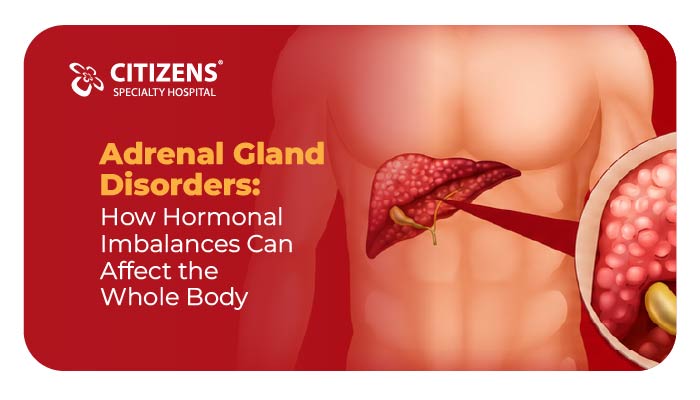
Adrenal Gland Disorders: How Hormonal Imbalances Can Affect the Whole Body

Sitting quietly on top of each kidney are two small, triangle-shaped glands that most people rarely think about: the adrenal glands. Despite being only a few centimetres in size, they produce hormones that affect almost every system in the body, including blood pressure, blood sugar, metabolism, immunity, salt and water balance, and the way we respond to stress.

What Do the Adrenal Glands Do?

Each adrenal gland has two parts, and each part makes different hormones.

The Adrenal Cortex (Outer Layer)

  • Cortisol: the main "stress hormone". It helps control blood sugar, blood pressure, metabolism and inflammation, and helps the body respond to illness and stress.
  • Aldosterone: regulates salt and water balance and blood pressure by acting on the kidneys.
  • Adrenal androgens (such as DHEA): weak male-type hormones that contribute to body hair and other changes, especially in women.

The Adrenal Medulla (Inner Core)

  • Adrenaline (epinephrine) and noradrenaline (norepinephrine): hormones of the "fight or flight" response, which raise heart rate and blood pressure in moments of danger.

The adrenal glands are controlled by the pituitary gland in the brain, which releases a hormone called ACTH to stimulate cortisol production.

Common Adrenal Gland Disorders

1. Cushing's Syndrome (Too Much Cortisol)

Cushing's syndrome occurs when the body is exposed to high levels of cortisol for a long time.

Causes:

  • Long-term use of steroid medicines such as prednisolone, which is the most common cause. This includes some unregulated "herbal" or traditional remedies that may secretly contain steroids.
  • Pituitary tumour producing excess ACTH (Cushing's disease)
  • Adrenal tumour producing excess cortisol
  • Tumours elsewhere producing ACTH, which is rare

Symptoms:

  • Weight gain, especially around the abdomen, face ("moon face") and upper back
  • Thin arms and legs with muscle weakness
  • Wide purple stretch marks on the abdomen, thighs or arms
  • Easy bruising and thin skin
  • High blood pressure
  • High blood sugar or diabetes
  • Weak bones (osteoporosis)
  • Mood changes, anxiety or depression
  • Irregular periods and excess facial hair in women

2. Adrenal Insufficiency (Too Little Cortisol)

Primary adrenal insufficiency (Addison's disease) occurs when the adrenal glands themselves are damaged. In many countries, autoimmune disease is the main cause; in India, tuberculosis of the adrenal glands remains an important cause.

Secondary adrenal insufficiency occurs when the pituitary gland does not produce enough ACTH. A common reason is suddenly stopping long-term steroid medicines, which suppresses the body's own cortisol production.

Symptoms:

  • Severe fatigue and weakness
  • Weight loss and loss of appetite
  • Nausea, vomiting and abdominal pain
  • Low blood pressure and dizziness on standing
  • Salt craving
  • Darkening of the skin, especially in skin creases, gums and scars (in Addison's disease)
  • Low blood sugar
  • Low mood and irritability

3. Primary Aldosteronism (Conn's Syndrome)

This occurs when the adrenal glands produce too much aldosterone, often due to a benign adrenal tumour or overactivity of both glands.

Why it matters: primary aldosteronism is one of the most common causes of secondary hypertension, high blood pressure with an identifiable cause. It is thought to account for a significant percentage of people with high blood pressure, yet it is greatly underdiagnosed.

Signs:

  • High blood pressure, often difficult to control even with three or more medicines
  • Low potassium levels, which can cause muscle weakness, cramps and palpitations
  • High blood pressure at a young age
  • Higher risk of heart attack, stroke and atrial fibrillation than other people with similar blood pressure

4. Pheochromocytoma and Paraganglioma

These are rare tumours, usually benign, that produce excess adrenaline and noradrenaline.

Classic symptoms come in episodes:

  • Severe headaches
  • Heavy sweating
  • Racing or pounding heartbeat
  • Sudden spikes in blood pressure
  • Anxiety, tremor and pale skin

Some of these tumours are linked to inherited genetic syndromes, so family screening may be recommended.

5. Congenital Adrenal Hyperplasia (CAH)

An inherited condition present from birth in which the adrenal glands cannot make enough cortisol and sometimes aldosterone, while producing too much androgen. It can cause salt-wasting crises in newborns, unusual genital development in girls, early puberty and fertility problems. It is often detected through newborn screening.

6. Adrenal Incidentalomas

With more CT and MRI scans being done, many people discover an adrenal lump by chance while being scanned for something else. Most are harmless and non-functioning, but every incidentaloma should be checked to see whether it produces hormones and whether it has features suggesting cancer.

7. Adrenal Cancer

Adrenocortical carcinoma is rare but aggressive. It may cause rapid onset of Cushing's features, excess hair growth or a mass in the abdomen.

When Should You Suspect an Adrenal Problem?

Consider talking to an endocrinologist if you have:

  • High blood pressure starting before age 40, or resistant to multiple medicines
  • High blood pressure with low potassium
  • Episodes of headache, sweating and palpitations
  • Unexplained weight gain with purple stretch marks and muscle weakness
  • Long-term steroid use followed by fatigue and dizziness
  • Persistent fatigue, weight loss, low blood pressure and darkening skin
  • An adrenal lump found on a scan

How Are Adrenal Disorders Diagnosed?

Diagnosis involves hormone tests and imaging, carefully interpreted by a specialist.

Hormone Tests

  • Morning serum cortisol and ACTH
  • ACTH stimulation test (Synacthen test): checks whether the adrenals can produce enough cortisol
  • Overnight dexamethasone suppression test, late-night salivary cortisol or 24-hour urine cortisol: screening tests for Cushing's syndrome
  • Aldosterone-to-renin ratio: screening for primary aldosteronism, sometimes followed by confirmatory tests
  • Plasma or urine metanephrines: screening for pheochromocytoma
  • Electrolytes: sodium and potassium
  • Blood sugar and DHEA-S

Imaging

  • CT or MRI of the adrenal glands: to identify tumours or enlargement
  • Adrenal vein sampling: in primary aldosteronism, to determine whether one or both glands are responsible before surgery
  • Specialised nuclear scans: in selected cases

Treatment Options

Treatment depends on the specific disorder:

  • Cushing's syndrome: gradual, supervised reduction of steroid medicines; surgery to remove pituitary or adrenal tumours; medicines that block cortisol production
  • Adrenal insufficiency: lifelong hormone replacement with hydrocortisone (and fludrocortisone in Addison's disease), plus education on "sick day rules" to increase the dose during illness
  • Primary aldosteronism: laparoscopic surgery to remove a single affected gland, or medicines such as spironolactone or eplerenone
  • Pheochromocytoma: surgical removal after careful preparation with blood pressure medicines
  • CAH: hormone replacement and specialist care from infancy through adulthood
  • Incidentalomas: monitoring or surgery depending on size, appearance and hormone activity

Many adrenal tumours can be removed through minimally invasive laparoscopic adrenalectomy, with small incisions and quick recovery.

Frequently Asked Questions

Is "adrenal fatigue" a real condition?

"Adrenal fatigue" is not a recognised medical diagnosis. Persistent tiredness deserves proper evaluation for real causes, including true adrenal insufficiency, thyroid disease, anaemia, sleep disorders and depression.

Can adrenal disorders be cured?

Many can. Tumours causing hormone excess can often be removed surgically. Conditions like Addison's disease require lifelong treatment but can be managed very well.

Should everyone with high blood pressure be tested for adrenal problems?

Not everyone, but testing for primary aldosteronism is recommended for people with resistant hypertension, low potassium, early-onset hypertension or an adrenal lump.