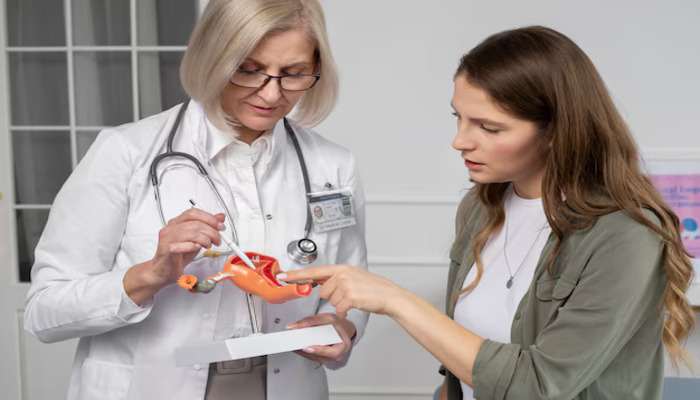
Laparoscopic (or “keyhole”) surgery in general means an approach that uses a small camera and long, thin instruments inserted through a few small cuts on the abdomen—often less than a centimetre each. The camera projects a magnified view on a monitor so surgeons can work with precision inside the pelvis while disturbing less tissue at the surface. Open surgery (also called laparotomy) uses a larger incision to directly access the pelvic organs by hand, which historically was the standard way to perform most gynaecology surgeries.
Incisions & scarring: Laparoscopic procedures use several tiny cuts, so scarring is minimal. Open surgery requires a larger incision that can leave a more visible scar.
Hospital stay & return to routine: Many patients go home within 24–48 hours after laparoscopy, whereas open procedures more often mean 3–5 days in hospital and a slower ramp-up to normal activities. However, this timeline can also vary from patient to patient.
Pain & complications: Smaller wounds generally mean less postoperative pain, quicker mobility, and lower wound-infection risk with laparoscopy. Open surgery carries higher wound-related risks simply because of the larger cut.
Recovery timelines (example: hysterectomy): After an abdominal (open) hysterectomy, full recovery often takes 6–8 weeks. Laparoscopic hysterectomy is typically shorter, with many people resuming light activity much sooner.
Pain & mobility: Expect less pain and earlier walking after laparoscopy; open procedures take more time to get comfortable moving around. Early light activity (as advised) reduces clot risk for both.
Timeline examples: After open abdominal hysterectomy, many people need 6–8 weeks to fully recover; after laparoscopic hysterectomy, some return to desk work in 1–2 weeks, with full recovery varying by person and procedure.
Wound care: Keep incisions clean and dry, watch for redness or discharge, and follow showering/bathing advice closely.
Activity & lifting: Increase activity gradually. Many can start gentle walking within days of laparoscopy; open surgery patients should avoid heavy lifting for several weeks or as advised by their physician.
Driving & work: You’ll need to be off strong pain medication and able to perform an emergency stop before driving. Desk work often resumes earlier after laparoscopy; physically demanding jobs require a longer break after open surgery.
Sexual activity: Your clinician will advise when it’s safe—commonly after the postoperative review and once internal healing has progressed.
Nutrition & hydration: Small, frequent meals, good hydration, and a fibre-rich diet help bowel function recover.
Follow-up: Attend all follow-ups to check healing, review pathology (if relevant), and plan any further treatment.
Your condition & goals: Benign problems (endometriosis, ovarian cysts, many fibroids) often suit laparoscopy; complex reconstructions, very large fibroids, or anticipated dense adhesions may push toward open.
Cancer specifics:
Your medical profile: Prior surgeries, BMI, cardiopulmonary status (since laparoscopy uses CO₂ insufflation), and bleeding risks influence safety and feasibility.
Surgeon & centre expertise: Outcomes are best when the team regularly performs the approach being considered and follows ERAS.
Patient preferences: Scar appearance, time off work, recovery speed, and tolerance for potential conversion to open all matter.
If you’re weighing gynaecology surgeries for a benign condition or as part of oncological surgeries—the safest choice is the one tailored to your diagnosis, anatomy, and goals, delivered by a team experienced in that specific approach. At Citizens Specialty Hospital, multidisciplinary gynaecology and gyn-oncology teams evaluate each case on its merits, offer both laparoscopic and open options, and use evidence-based pathways such as ERAS to support steady recovery.