Living with chronic digestive discomfort can be a source of constant stress and uncertainty. When symptoms like severe abdominal pain, persistent diarrhea, and profound fatigue disrupt your daily life, finding an accurate explanation becomes your first priority. These disruptive symptoms often point toward Inflammatory Bowel Disease (IBD), an umbrella term for chronic inflammation of the digestive tract.
The two most prominent conditions under the IBD umbrella are Crohn’s disease and ulcerative colitis. Because these illnesses share many overlapping symptoms, they are frequently confused with one another.
Understanding Crohn’s Disease
Crohn’s disease is a chronic inflammatory condition that can develop anywhere along the entire digestive tract. The inflammation caused by this disease is highly variable, making each patient's experience unique.
Affected Areas
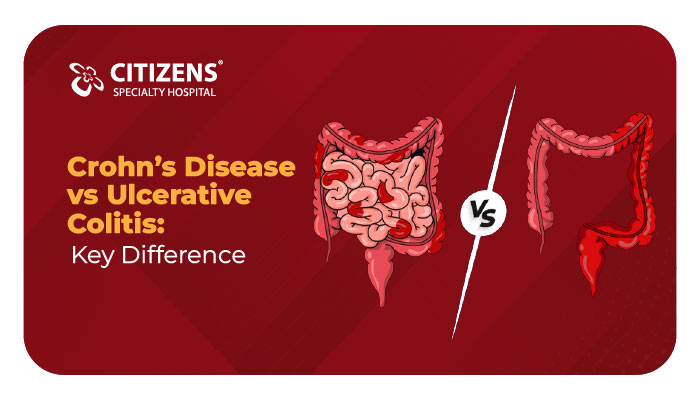
One of the defining characteristics of Crohn's disease is its ability to affect any part of the gastrointestinal (GI) tract, from the mouth all the way down to the anus. Most commonly, it impacts the end of the small intestine (the ileum) and the beginning of the large intestine (the colon).
Inflammation Pattern
The inflammation associated with Crohn's disease appears in patches. This means a patient might have a diseased section of the intestine located right next to perfectly healthy tissue. Medical professionals refer to these as "skip lesions." Furthermore, the inflammation can penetrate through the entire thickness of the bowel wall, a feature known as transmural inflammation. This deep inflammation can lead to complications such as fistulas (abnormal connections between organs) and strictures (narrowing of the bowel).
Common Symptoms
Because Crohn’s disease can affect any part of the GI tract, symptoms vary widely. Patients frequently experience crampy abdominal pain, diarrhea, reduced appetite, and unintended weight loss. Some individuals also develop mouth sores or notice pain and drainage around the anal region.
Understanding Ulcerative Colitis
Ulcerative colitis, commonly referred to as UC, is another form of Inflammatory Bowel Disease. While it shares some systemic symptoms with Crohn's, its physical impact is much more localized.
Affected Areas
Unlike Crohn's disease, ulcerative colitis is strictly confined to the large intestine (the colon) and the rectum. It never affects the stomach, esophagus, or small intestine. For many patients, the disease begins in the rectum and spreads slowly upward through the colon over time.
Inflammation Pattern
The pattern of inflammation in UC is continuous. There are no patches of healthy tissue mixed in with the diseased areas; the inflammation flows uniformly. Additionally, the disease only affects the innermost lining of the colon, known as the mucosa. It does not penetrate through the deeper layers of the bowel wall.
Common Symptoms
The continuous inflammation of the colon lining often causes ulcers to form, which produce mucus and pus. The most defining symptom of ulcerative colitis is bloody diarrhea, often accompanied by a sudden, urgent need to have a bowel movement. Patients may also experience rectal pain, fatigue, and lower abdominal cramping.
The Core Differences at a Glance
To summarize, medical professionals look for three main distinctions when evaluating Crohn's disease versus ulcerative colitis:
Getting an Accurate Diagnosis
Because the outward signs of Crohn's disease and ulcerative colitis are so similar, a physical exam and symptom history are not enough to confirm a diagnosis. Gastroenterologists utilize a variety of advanced diagnostic tools to view the inside of the digestive tract and determine the exact nature of the inflammation.
Your physician will likely recommend an endoscopy or a colonoscopy. During these procedures, the doctor uses a thin, flexible tube equipped with a camera to visually inspect the GI tract. They will also take small tissue samples (biopsies) for laboratory analysis. Blood tests, stool samples, and advanced imaging scans like MRIs or CT scans may also be used to evaluate the extent of the disease and rule out other potential infections.
Conclusion
If you are experiencing persistent digestive issues, do not wait for the symptoms to worsen. Reach out to a best gastroenterologist to schedule a comprehensive evaluation. By getting a precise diagnosis, you can begin a targeted treatment plan designed specifically for your body and your needs.