Malaria affects over 240 million people worldwide each year, yet many remain unclear about how the disease actually spreads from person to person. Understanding the complex life cycle of the malaria parasite is crucial for both prevention and treatment, as it reveals why certain interventions work and when they're most effective.
The malaria parasite follows an intricate journey that involves both human hosts and mosquito vectors. This biological process determines not only how the disease transmits but also explains the timing of symptoms, the effectiveness of various treatments, and why prevention strategies focus heavily on mosquito control. By grasping these mechanisms, patients and healthcare providers can make more informed decisions about protection, diagnosis, and care.
Malaria is caused by Plasmodium parasites, with five species capable of infecting humans. The most dangerous, Plasmodium falciparum, accounts for most severe cases and deaths worldwide. These microscopic organisms have evolved sophisticated survival strategies that allow them to thrive in both human and mosquito hosts.
The parasite's success lies in its ability to change form and function as it moves through different stages of its life cycle. Each transformation serves a specific purpose, whether it's evading the human immune system, reproducing rapidly, or preparing for transmission to the next host.
The malaria life cycle begins when an infected female Anopheles mosquito takes a blood meal from a human host. During this feeding, the mosquito injects saliva containing sporozoites—the infectious form of the parasite—into the bloodstream. This moment marks the beginning of what can become a life-threatening infection if left untreated.
These sporozoites are remarkably efficient. Within minutes of injection, they travel through the bloodstream toward the liver, where they will undergo their first major transformation. The speed of this process explains why post-exposure treatments must be administered quickly to be most effective.
Once sporozoites reach the liver, they invade hepatocytes (liver cells) and begin a period of rapid multiplication called the exo-erythrocytic cycle. Inside these cells, each sporozoite develops into a schizont—a structure containing thousands of merozoites.
This liver phase typically lasts 7–10 days in most malaria species, though it can vary. During this time, the infected person shows no symptoms, as the parasites remain hidden within liver cells. This asymptomatic period represents a critical window where early treatment could prevent the more severe blood-stage infection that follows.
Some Plasmodium species, particularly P. vivax and P. ovale, can form dormant liver stages called hypnozoites. These "sleeping" parasites can remain inactive for months or even years before reactivating, causing relapsing malaria episodes long after the initial infection.
After completing development in the liver, mature schizonts rupture and release thousands of merozoites into the bloodstream. These merozoites quickly invade red blood cells, initiating the erythrocytic cycle—the stage responsible for malaria's characteristic symptoms.
Inside red blood cells, merozoites feed on hemoglobin and continue to multiply. As they grow, they transform into trophozoites and eventually into new schizonts. This process takes approximately 48–72 hours, depending on the parasite species, before the infected red blood cells burst and release more merozoites to continue the cycle.
While most merozoites continue the asexual reproduction cycle in red blood cells, some develop into gametocytes—the sexual forms of the parasite. These male and female gametes represent the parasite's preparation for transmission back to mosquitoes.
Gametocytes circulate in the bloodstream for several days to weeks, waiting for the opportunity to complete their sexual reproduction. They cannot develop further in the human host and require uptake by a mosquito to continue their life cycle.
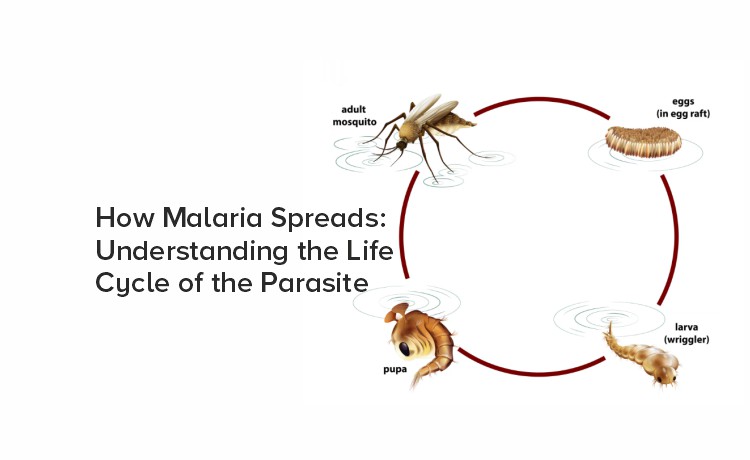
When a female Anopheles mosquito feeds on blood containing gametocytes, these sexual forms enter the mosquito's stomach. The dramatic change in environment—from the warm human body to the cooler mosquito gut—triggers sexual reproduction.
Male and female gametocytes mature into gametes and fuse to form zygotes. These zygotes develop into ookinetes, which penetrate the mosquito's stomach wall and form oocysts. Inside these cysts, thousands of sporozoites develop over 10–14 days.
Once mature, the oocysts rupture and release sporozoites, which migrate to the mosquito's salivary glands. The mosquito is now infectious and can transmit malaria parasites to the next human host during subsequent blood meals.
Temperature, humidity, and rainfall significantly influence malaria transmission rates. Warmer temperatures accelerate parasite development in mosquitoes, while adequate moisture supports mosquito breeding. These factors explain why malaria is most common in tropical and subtropical regions.
Mosquito behavior also affects transmission patterns. Anopheles mosquitoes typically feed at night and prefer certain blood sources, which influences who gets infected and when transmission occurs. Understanding these patterns helps public health officials target prevention efforts more effectively.
Understanding malaria's life cycle reveals that transmission depends on the successful completion of multiple, interconnected stages. Each stage represents a vulnerability that can be targeted with appropriate interventions. From the initial mosquito bite through liver development, blood-stage multiplication, and eventual return to mosquitoes, the parasite faces numerous challenges that prevention strategies can exploit.
For individuals living in or traveling to malaria-endemic areas, this knowledge empowers better decision-making about protective measures. For healthcare providers, understanding the parasite's development helps optimize timing of treatments and diagnostic approaches. Most importantly, recognizing the intricate relationship between parasites, mosquitoes, and humans underscores why comprehensive, community-wide prevention strategies remain our most powerful tool against this ancient disease.