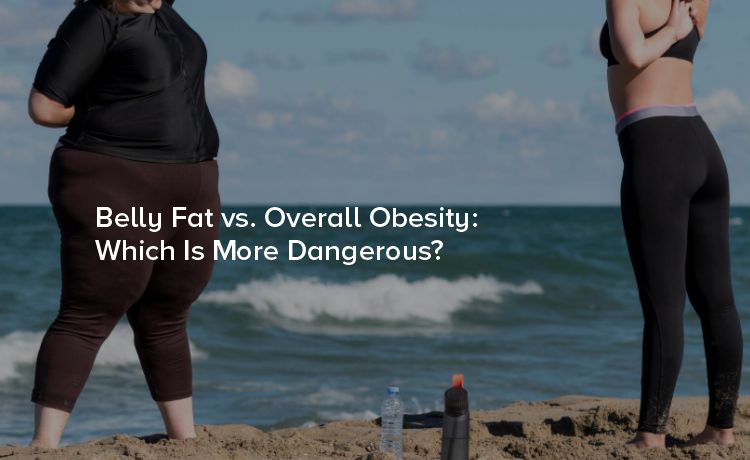
When we think about weight and its impact on health, the conversation often centers on obesity as a general condition. Body Mass Index (BMI) has long been the standard for classifying weight status, but it doesn't tell the whole story. A growing body of research suggests that where we store fat on our bodies is just as important, if not more so, than our total body weight. This raises a critical question: which is a greater threat to our health—excess belly fat or overall obesity?
Understanding the difference between these two conditions is vital for accurately assessing health risks and developing effective strategies for a healthier life. While both are linked to significant health problems, the fat stored deep within the abdomen, known as visceral fat, poses unique and potent dangers.
Not all body fat is created equal. The location where fat accumulates plays a significant role in its metabolic activity and its impact on your overall health. There are two primary types of fat to consider: subcutaneous fat and visceral fat.
Subcutaneous fat is the layer of fat that lies just beneath the skin. It’s the fat you can pinch with your fingers on your arms, legs, and hips. While having too much of it can contribute to being overweight or obese, it is generally considered less harmful than visceral fat. In fact, a certain amount of subcutaneous fat is necessary for functions like energy storage, insulation, and cushioning your body from impact.
Visceral fat, often referred to as "belly fat" or "abdominal fat," is different. It is stored deep within the abdominal cavity, surrounding vital organs such as the liver, stomach, and intestines. You can't see or pinch visceral fat, which is what makes it so deceptive. Even individuals who appear relatively slim can have significant amounts of visceral fat, a condition sometimes called "thin outside, fat inside" (TOFI).
Visceral fat is metabolically active, meaning it acts like an organ itself. It releases inflammatory molecules and fatty acids directly into the bloodstream and liver, which can disrupt normal hormonal functions and lead to serious health issues.
To compare the risks of belly fat and overall obesity, we first need to understand how each is measured and defined.
Overall obesity is typically diagnosed using the Body Mass Index (BMI), a simple calculation that uses a person’s height and weight. The standard classifications are:
While BMI is a useful screening tool for large populations, it has significant limitations. It doesn't distinguish between fat and muscle mass, meaning a very muscular person could have a high BMI without being overfat. More importantly, it provides no information about fat distribution.
Measuring waist circumference is a simple and effective way to estimate the amount of visceral fat. A high waist circumference is a strong indicator of excess abdominal fat and is linked to a higher risk of health problems, even for individuals with a normal BMI. General guidelines for high-risk waist measurements are:
Combining BMI with waist circumference provides a more comprehensive picture of an individual's health risks than using either measurement alone.
The metabolic activity of visceral fat is what makes it particularly dangerous. Unlike subcutaneous fat, visceral fat cells release inflammatory substances called cytokines and other hormones that interfere with the body's normal processes. This can lead to a cascade of health problems.
Because of these direct metabolic effects, many health experts now consider a large waistline to be a more accurate predictor of disease risk than a high BMI.
The evidence overwhelmingly points to excess belly fat being more dangerous than overall obesity when measured by BMI alone. An individual with a normal BMI but a large waist circumference (a condition known as central obesity) may be at a higher risk for chronic disease than someone who is classified as obese by BMI but has their fat distributed more evenly, such as in the hips and thighs.
This doesn't mean overall obesity is harmless. Carrying excess weight in any form puts strain on your joints, can lead to mobility issues, and is associated with its own set of health risks. However, the specific metabolic disruption caused by visceral fat makes it a more immediate and severe threat to your systemic health. The bottom line is that while all excess fat is a concern, the fat you carry around your middle is the most critical to address.
If you are concerned about your belly fat, the good news is that it responds well to lifestyle changes. Visceral fat is often the first type of fat to be lost when you adopt a healthier routine.
Here are some effective strategies:
Shifting our focus from the number on the scale to the measurement around our waist offers a more accurate assessment of our health. While BMI can be a starting point, it's the presence of excess visceral fat that serves as a powerful warning sign for future health problems. By understanding the unique dangers of belly fat and taking proactive steps to reduce it, you can significantly lower your risk of chronic disease and pave the way for a longer, healthier life.
If you have concerns about your weight or body composition, consulting with a healthcare professional can provide personalized guidance and support to help you achieve your health goals safely and effectively.